Few things unsettle a driver like a symbol lighting up on the dashboard mid-journey. Modern car warning lights are your vehicle’s way of talking to you, and learning the language makes the difference between a minor garage visit and a breakdown on the hard shoulder. Some lights are little more than reminders. Others mean stop as soon as it is safe to do so. This guide explains what the colours and the most common symbols mean, which ones demand urgent action, and the simple habits that keep most of them switched off.
The colour code comes first
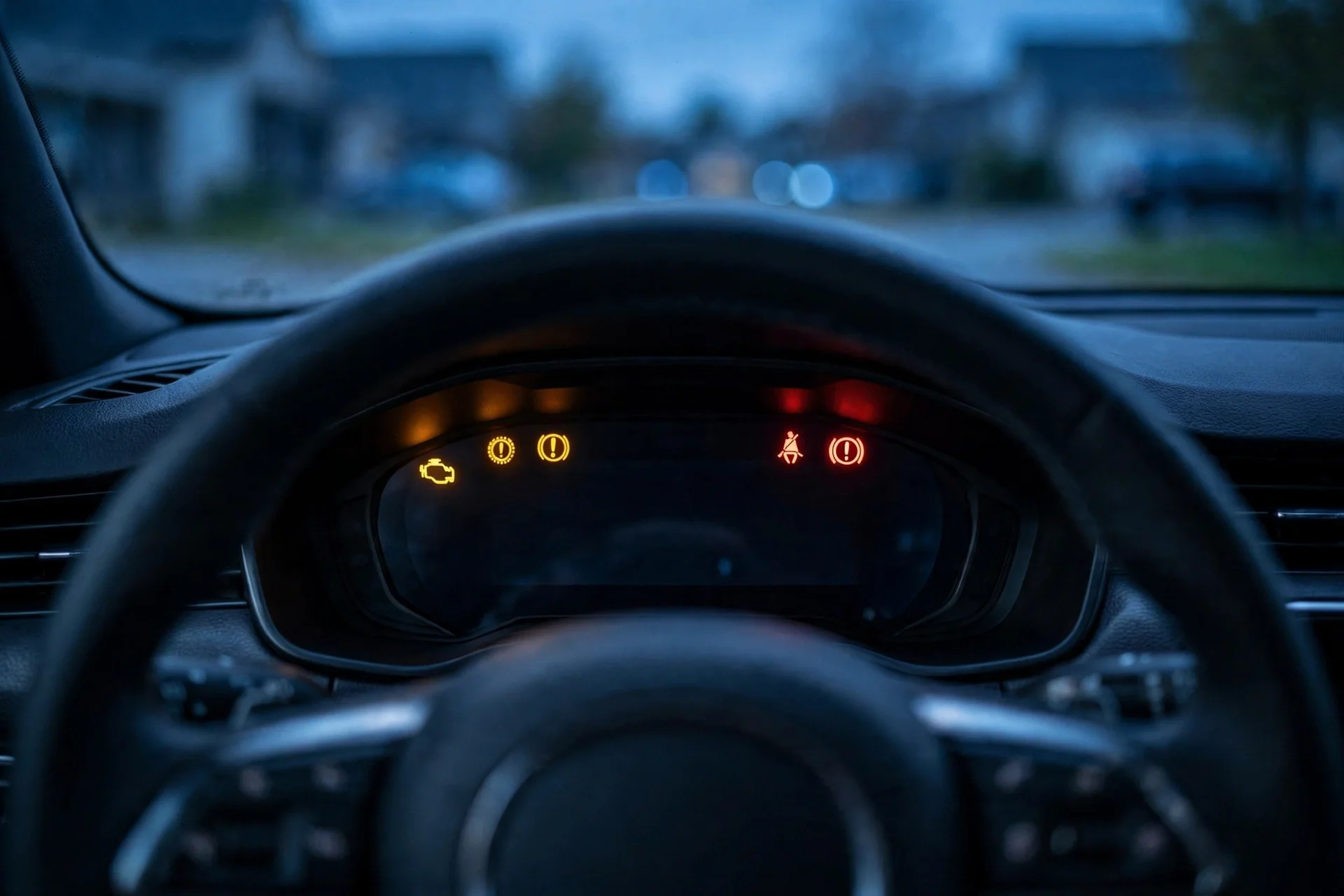
Before memorising individual symbols, learn the colour system, because it works like a traffic light. Green and blue lights are information: they tell you a system is switched on, such as your headlights, indicators or cruise control. They need no action. Amber and yellow lights are warnings. Something needs attention soon, but in most cases you can continue driving carefully and book a garage visit. Red lights are the serious ones. A red symbol usually means a safety problem or a fault that could damage the car quickly, and the standard advice is to stop as soon as it is safe and seek help.
There is one more distinction worth knowing. A light that comes on briefly when you start the engine and then goes out is the car checking its own systems, which is normal. A light that stays on, or appears while you are driving, is the one that matters.
The car warning lights you should never ignore
Four red warnings deserve immediate respect. The oil pressure light, shaped like an old-fashioned oil can, means the engine is not being lubricated properly. Continuing to drive can destroy the engine within minutes, so switch off and call for assistance. The temperature warning means the engine is overheating; pull over, switch off and let it cool before checking anything, because opening a hot cooling system is dangerous. The brake system warning, an exclamation mark in a circle, can mean low brake fluid or a serious fault. If it appears with a spongy pedal or longer stopping distances, stop driving the car. Finally, the battery or charging light means the electrical system is running on borrowed time. You may have enough charge to reach a garage, but the car can cut out once the battery is drained, so head straight for help rather than continuing your journey.
Amber warnings: book a check soon
The engine management light is the amber symbol most drivers know, and the one most often postponed. It covers everything from a loose fuel cap to a failing sensor or an exhaust problem, which is why guessing rarely works. A garage diagnostic reading will identify the cause, and our guide to following a sensible vehicle service schedule explains how routine checks catch many of these faults before the light ever appears.
The tyre pressure monitoring light, an exclamation mark inside a horseshoe shape, means one or more tyres are under-inflated or the system has detected a problem. Check pressures at the earliest opportunity, because soft tyres wear faster, use more fuel and handle poorly; our tyre services guide covers the checks that keep tyres safe between visits. ABS and traction control lights suggest a fault in the systems that help you brake and grip in slippery conditions. The car will usually still drive and brake normally, but the safety net is switched off, so treat wet roads with extra care and get the system inspected. Stability control, airbag and glow plug warnings on diesel cars all follow the same rule: amber means soon, not someday.
What to do when a light comes on while driving
First, do not panic, and do not ignore it either. Note the colour. If it is red, find a safe place to stop, switch off the engine and call your breakdown provider or a garage. If it is amber, reduce speed, avoid hard acceleration and listen for new noises or changes in how the car feels. Check the handbook when you stop, because the exact meaning of some symbols varies between manufacturers. If the car also loses power, makes unusual sounds, steams, or the steering or brakes feel wrong, treat an amber light as a red one and stop. Many drivers are unsure how these checks fit around formal inspections, and our explainer on whether the MOT or a service should come first helps you plan both. If you are arranging the visit yourself, knowing how to find a reliable local garage makes the process far less stressful.
Why modern dashboards show more symbols than ever
A car built twenty years ago might have had a dozen dashboard symbols. A current model can have several times that, because modern cars are filled with sensors monitoring everything from emissions to driver assistance systems. Electric and hybrid models add their own symbols for battery condition, charging and high-voltage systems, which is one reason EV servicing involves different checks from a conventional car. The upside of all this monitoring is early warning: faults are often flagged while they are still cheap to fix. The downside is confusion, which is why a few minutes with the owner’s handbook, before a light ever appears, is time well spent.
Keeping warning lights off with routine care
Most warning lights are the end of a story that started weeks earlier: oil that was past its best, a tyre slowly losing pressure, a brake pad wearing thin. Regular maintenance interrupts those stories. Fresh oil and filters protect the engine, as our guide to oil changes and why they matter explains, and simple weekly checks of tyres, lights and fluid levels take five minutes. Seasonal checks help too, from clearing misted windows safely in winter to making sure the cooling system is ready for a summer heatwave. None of this guarantees a dark dashboard forever, but it stacks the odds heavily in your favour.
Warning lights and the MOT test
Dashboard warnings also matter at MOT time. A lit engine management, ABS or airbag light is grounds for a dangerous or major fault finding, which means a failure until the underlying problem is fixed, and testers take illuminated safety warnings seriously even when the car feels fine. That is one more reason to deal with amber lights when they appear rather than in a panic the week before the test is due. A car that arrives with a dark dashboard and a documented history of prompt repairs is also simply worth more when you sell it, because buyers read neglected warning lights as a sign of neglected everything else.
Car warning lights are not there to frighten you; they are there to give you time. Read the colour, respect the red ones, act on the amber ones promptly, and keep up the routine care that prevents most of them. Do that, and the dashboard becomes what it should be: a helpful co-driver rather than a source of dread.