Beauty statistics UK data can provide a useful picture of how consumers, brands and the wider market are changing. From skincare and makeup preferences to purchasing behaviour and the growth of new beauty categories, reliable data helps explain developments that are difficult to understand from trends alone. Statistics can also add context to discussions about British beauty culture, sustainability, premium products and the future of the sector.
However, beauty figures need to be interpreted carefully. Different studies may examine different populations, time periods, product categories or definitions of the beauty market. Understanding that context is essential when using UK beauty data to assess consumer behaviour or industry performance.
Why Beauty Statistics UK Data Matters
Beauty statistics UK research can help consumers, businesses, marketers and researchers understand what is happening across Britain’s beauty sector. Rather than relying entirely on individual opinions or social media trends, data can reveal broader patterns.
For example, a beauty trend may appear extremely popular online while representing only a particular audience. Conversely, an established purchasing habit may receive little attention on social media despite being commercially important.
Statistics help bridge that gap by providing measurable information about markets and consumers. When combined with qualitative research, they can offer a more complete picture of beauty in Britain.
Understanding UK Beauty Industry Statistics
UK beauty industry statistics can cover a wide range of areas, including retail sales, product categories, consumer preferences, business performance and market growth. Because the beauty industry includes skincare, makeup, haircare, fragrance and other personal care categories, there is no single number that describes the entire sector.
Market reports may use different boundaries when defining beauty. Some focus on cosmetics, while others include broader personal care products. Consequently, two apparently different figures can both be accurate if they measure different parts of the market.
This is why readers should always consider the source, date, methodology and definition used before comparing beauty industry figures.
Beauty Facts and What They Tell Us
Beauty facts can be useful starting points for understanding consumer behaviour, but a fact becomes more meaningful when its context is clear. A percentage describing product usage, for example, may relate to survey respondents rather than the entire UK population.
Likewise, a reported increase in demand may describe a particular period or product category rather than the beauty industry as a whole.
Good interpretation therefore involves asking what the number measures, when it was collected and who was included. These simple questions can prevent misleading conclusions.
Skincare Statistics and Changing Consumer Interests
Skincare statistics are particularly useful for examining how consumer priorities are developing. The Skincare has become increasingly connected with ingredient awareness, routine building and product education.
Consumers can now access information about ingredients through brand websites, retailers, beauty publications, social media creators and scientific resources. This has changed the way many people research products before making a purchase.
At the same time, interest in skincare does not mean that every consumer follows an extensive routine. Some prefer multiple targeted products, while others choose a small number of essential items.
When evaluating skincare data, it is therefore useful to distinguish between product awareness, purchasing behaviour, actual usage and consumer interest. These measures can tell different stories.
Makeup Statistics and Consumer Behaviour
Makeup statistics can reveal useful information about cosmetic purchasing and usage, although the results depend heavily on how research is conducted. The Makeup encompasses many categories, from complexion products and mascara to lip products, eye cosmetics and specialist items.
Consumer preferences can also change according to age, lifestyle, occasion and cultural influences. A person may use minimal makeup during the working week but choose a more elaborate look for events.
Social media has added another dimension. Tutorials and creator-led content can increase awareness of techniques and products, potentially influencing how consumers discover and evaluate cosmetics.
However, online engagement should not automatically be interpreted as equivalent to sales or long-term consumer demand. Different forms of data measure different behaviours.
Beauty Market Statistics and the Role of Retail
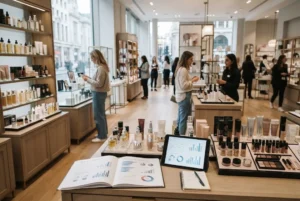
Beauty market statistics can help explain how consumers purchase products and how the retail environment is changing. Physical stores remain important for shoppers who want to see, test or compare products, while online channels offer convenience and access to a broader range of brands.
Many consumers now move between both environments. Someone may discover a product online, visit a shop to examine it and eventually purchase through whichever channel offers the best combination of convenience and value.
Beauty retail is also influenced by independent businesses, specialist retailers and direct-to-consumer brands. This creates a more diverse marketplace than a simple division between traditional shops and large online platforms.
UK Beauty Data and Consumer Demographics
UK beauty data becomes more useful when consumer demographics are considered. Age, location, income, lifestyle and personal preferences can all influence purchasing behaviour.
Generational comparisons can sometimes highlight differences in product discovery or shopping habits. Younger consumers may encounter products through social platforms, while other groups may place greater emphasis on established retailers, recommendations or traditional media.
These patterns should not be treated as universal rules. Individuals within any demographic group can behave very differently. Demographic data is most useful when it identifies broad tendencies rather than attempting to predict every consumer.
Beauty Consumer Statistics and Purchasing Decisions
Beauty consumer statistics can cover attitudes towards price, quality, ingredients, sustainability, brand reputation and convenience. These factors often overlap when consumers decide whether a product offers good value.
Price remains an important consideration, but value does not necessarily mean choosing the cheapest option. Consumers may consider how long a product lasts, whether it fits their routine, how well it performs and whether they trust the brand.
Ingredient transparency can also influence decisions. As consumers become more familiar with cosmetic terminology, some shoppers increasingly want to understand what a formulation contains and why particular ingredients are included.
This growing interest connects with beauty research, which explores the science, evidence and research methods behind modern skincare and cosmetics.
The Growth of Premium and Luxury Beauty
Another useful area of beauty market analysis is the relationship between mainstream, premium and luxury products. Consumers do not always make purchasing decisions based solely on functional benefits.
Packaging, brand identity, fragrance, shopping experience and perceived exclusivity can influence how a product is valued. Premium beauty can therefore occupy a distinct position even when less expensive alternatives offer similar basic functions.
Luxury beauty also connects with lifestyle and personal identity. Understanding this part of the market requires more than sales figures because emotional and cultural factors can affect purchasing behaviour.
Sustainability in the UK Beauty Market
Sustainability has become an increasingly visible issue within the beauty industry. Consumers encounter discussions about recyclable packaging, refillable products, waste reduction, ingredients and environmental impact.
Statistics can help determine whether interest in sustainability translates into measurable changes in purchasing behaviour. However, survey responses and actual purchasing decisions are not always identical.
A consumer may express strong support for environmentally responsible products while still considering price, availability or performance when making a purchase. This is one reason behavioural data can be particularly valuable.
The wider environmental side of the subject is explored in sustainable beauty, including sustainability, packaging and changing approaches to beauty consumption.
British Beauty Culture and What the Numbers Cannot Explain
Statistics are valuable, but they cannot fully explain the cultural meaning of beauty. Numbers may show that a product category is becoming more popular, but they may not explain why consumers find it appealing.
British beauty culture is influenced by fashion, media, regional identities, personal expression and social expectations. These factors can shape consumer behaviour in ways that are difficult to capture through a single survey.
Exploring British beauty culture alongside quantitative data can therefore provide a richer understanding of how beauty habits develop across Britain.
How to Read Beauty Industry Facts Critically
Not every beauty statistic deserves the same level of confidence. Readers should consider several factors before accepting a figure at face value.
- Check the source: Look for reputable research organisations, official statistics, established market research providers or transparent studies.
- Check the date: Beauty markets can change quickly, so older data may not represent current behaviour.
- Understand the sample: A survey of a specific group should not automatically be treated as representative of everyone in Britain.
- Examine the wording: Terms such as “consumers”, “respondents” and “households” can refer to different populations.
- Look at methodology: The way data was collected can influence the result.
- Compare carefully: Two statistics should only be compared when they use sufficiently similar definitions and methods.
This approach is especially important when statistics appear in marketing materials. A genuine number can still create a misleading impression if its context is omitted.
Why Beauty Data and Social Media Trends Can Differ
Social media provides an immediate view of what is receiving attention, but attention and market demand are not identical. Algorithms can amplify highly visual or unusual beauty content, making certain products appear more dominant than they are across the wider population.
Traditional purchasing patterns may therefore coexist with fast-moving online trends. Consumers can watch a viral tutorial without buying the featured product, or they may adopt a technique while continuing to purchase familiar brands.
Combining social listening with sales data, surveys and other research methods can provide a more balanced picture.
The Importance of Research Quality in Beauty Data
Reliable beauty data depends on reliable research. This includes clearly defined questions, appropriate samples and transparent methodology.
Research quality matters because small methodological differences can change how a statistic should be interpreted. For instance, asking whether someone is “interested in” a beauty category produces a different result from asking whether they purchased or used a product during a specific period.
This is where evidence-based beauty research becomes valuable. Rather than relying on one isolated number, researchers can examine multiple forms of evidence to identify stronger patterns.
What Beauty Statistics UK Data Could Reveal About the Future
Future beauty statistics are likely to provide greater insight into personalisation, sustainability, digital shopping and changing consumer expectations. Technology may also generate new forms of data about product discovery and consumer engagement.
At the same time, traditional factors such as price, convenience and product performance are likely to remain important. New trends do not necessarily eliminate established purchasing motivations.
The most useful future analysis will therefore combine commercial data with behavioural and cultural research. This broader approach can help explain not only what consumers buy, but also why they make particular choices.
How Businesses Can Use UK Beauty Data
Beauty businesses can use data to understand customer needs, identify emerging categories and evaluate marketing strategies. However, statistics should support decision-making rather than replace judgement.
A business might identify increased interest in a particular product category, for example, but still need to consider competition, pricing, formulation, distribution and customer expectations before investing heavily.
Good data analysis turns statistics into useful questions. Instead of simply asking whether a market is growing, businesses can ask which consumers are driving that growth, what motivates them and whether the trend appears sustainable.
Final Thoughts on Beauty Statistics UK
Beauty statistics UK data can provide valuable insight into Britain’s changing beauty landscape. Skincare statistics, makeup statistics, consumer surveys and market research all contribute different pieces to the wider picture.
The key is to interpret numbers carefully. Reliable sources, transparent methodology and appropriate context are essential when evaluating beauty industry facts and consumer trends.
When combined with research into beauty science and British consumer culture, statistics become more than isolated numbers. They can help explain how people discover products, what influences purchasing decisions and how the UK beauty industry continues to evolve.
For readers and businesses alike, the most useful approach is to treat data as evidence that supports deeper understanding rather than as a shortcut to simple conclusions.