

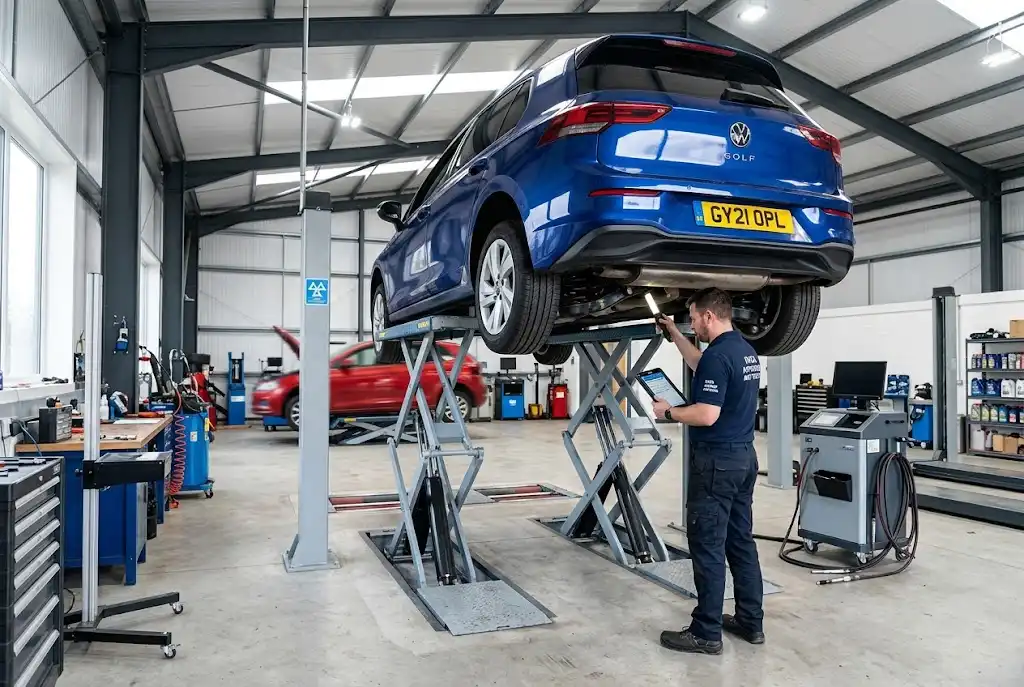
Keeping up with MOT and service requirements is essential for UK motorists. Although an MOT test and routine vehicle servicing have different purposes, both play an important role in responsible vehicle ownership. Drivers need to know when their MOT is due, understand what the test covers and continue maintaining their vehicle throughout the year rather than relying on the annual test alone.
MOT requirements and testing procedures can also change over time. The Driver and Vehicle Standards Agency (DVSA) administers the MOT service and maintains the rules, standards and systems used by authorised testing stations. Its official guidance is updated when changes are introduced, making reliable information particularly important for motorists and garages.
What Does MOT and Service Mean?
The terms MOT and service are often used together, but they describe two different parts of vehicle ownership.
An MOT is a statutory test for eligible vehicles that checks whether they meet required roadworthiness and environmental standards at the time of the test. The DVSA explains that the purpose of the MOT is to check qualifying vehicles at least annually once they reach the applicable age requirement.
A service is different. It is planned maintenance intended to help keep a vehicle in appropriate working condition. Depending on the vehicle and its manufacturer’s recommendations, servicing may include checks and maintenance relating to fluids, filters, brakes, tyres, steering, suspension and other components.
In simple terms, an MOT checks whether a vehicle meets the required test standards at that point in time, while servicing forms part of ongoing vehicle maintenance.
MOT and Service: Why Both Matter
Passing an MOT does not mean a vehicle will remain mechanically healthy until its next test. Similarly, having a vehicle serviced does not automatically mean it has passed its MOT.
This distinction is important because drivers sometimes treat the MOT as their annual vehicle inspection. In reality, the two processes have different objectives. A car can pass its MOT and still need maintenance, while a vehicle undergoing routine servicing may have problems that need to be repaired before it can meet MOT requirements.
Combining a suitable service schedule with timely MOT testing gives motorists a more complete approach to vehicle care. It also connects with the wider auto services information available to UK drivers.
How Often Does a Car Need an MOT?
For eligible vehicles, the MOT system generally involves annual testing once the vehicle reaches the relevant testing age. However, drivers should not rely solely on a generic date or assume that every vehicle follows exactly the same rules.
Check the official government information for your vehicle and keep track of its individual MOT status and expiry date. This is particularly important when buying a used car because the previous owner’s testing arrangements do not necessarily tell you when your next MOT is due.
Drivers should also avoid leaving an MOT until the last possible moment. Booking ahead can provide more flexibility if the vehicle needs repairs before the test or if the preferred testing station has limited availability.
Latest MOT Updates Drivers Should Watch
The MOT system is periodically updated by the DVSA. Official guidance currently includes amendments made during 2026, demonstrating why motorists and testing businesses should rely on current information rather than old articles or outdated advice.
Recent updates to the wider MOT framework have included changes affecting testing procedures, tester requirements and vehicle classifications. For example, the official 2026 update record notes changes concerning zero-emission goods vehicles between 3,501kg and 4,250kg, which became class 7 vehicles from 1 June 2026.
The DVSA also publishes special notices when changes to the MOT scheme need to be communicated before they are incorporated into the main testing guide. Its 2026 collection includes notices covering areas such as MOT testing service changes, fees and appeals, vehicle classifications and photographs during testing.
For ordinary car owners, the practical lesson is simple: when an MOT rule appears to have changed, check the latest official DVSA or GOV.UK guidance rather than relying on social media posts or older motoring articles.
What Does an MOT Test Check?
An MOT covers specific testable items and uses established inspection standards. The exact inspection depends on the vehicle category and applicable testing manual.
For cars and passenger vehicles, areas assessed can include components such as lights, steering, brakes, tyres, seat belts, bodywork and other safety-related items. The MOT is not designed to provide a complete mechanical inspection of every part of a vehicle.
This explains why an MOT should not replace servicing. A service can provide an opportunity to assess maintenance requirements that fall outside the specific scope of the statutory test.
Drivers can consult the official MOT inspection manuals and related guidance through GOV.UK, where the DVSA publishes current information for testing standards and procedures.
Preparing Your Car Before an MOT
Drivers can take a few sensible steps before an MOT appointment. Basic checks may help identify obvious issues that could otherwise lead to a test failure.
- Check that exterior lights are working.
- Check tyre condition and pressures.
- Make sure the windscreen provides adequate visibility.
- Check that windscreen wipers and washers work correctly.
- Check that registration plates are clean and readable.
- Make sure seat belts are functioning correctly.
- Remove unnecessary clutter from the vehicle.
These checks are not a guarantee that the vehicle will pass. They are simply practical steps that can help motorists identify straightforward issues before presenting the vehicle for testing.
What Happens If a Car Fails Its MOT?
An MOT failure does not necessarily mean that a vehicle is beyond repair. It means that one or more defects have been identified under the applicable testing standards and that appropriate action may be required.
The next step depends on the defects identified and where the vehicle is repaired. Drivers should read the MOT result carefully and ask the garage to explain any recommended repairs.
Official DVSA information also sets out circumstances in which a partial retest may be available. The applicable rules depend on factors such as where the vehicle is repaired and how quickly it is returned for testing.
If a vehicle fails, motorists should avoid assuming that every suggested repair is automatically necessary without understanding the connection between the identified defect and the proposed work. A reputable garage should be able to explain the issue clearly.
Why Servicing Should Continue After an MOT
A successful MOT provides useful information, but it does not eliminate the need for routine maintenance. Vehicles continue to experience wear after passing the test, and components can deteriorate before the next annual inspection.
Following the manufacturer’s recommended service schedule remains important. The appropriate service interval can depend on mileage, time, vehicle design and how the vehicle is used.
Drivers should also respond to changes between MOT appointments. Unusual noises, warning lights, vibrations, changes in braking performance or fluid leaks can all justify professional investigation.
For more detailed maintenance advice, motorists can follow our guide to vehicle maintenance and learn how preventative checks can support better vehicle reliability.
MOT Changes and Digital Information
The MOT system relies heavily on digital records. The DVSA states that an electronic MOT record is created for each test and that this electronic record is the legal record of the test.
This makes it easier for motorists to access important testing information without relying solely on paper documentation. Drivers should nevertheless retain relevant service invoices and repair records because servicing history is separate from the statutory MOT record.
Digital systems also allow the testing framework to be updated more efficiently. The DVSA’s guidance and inspection manuals are maintained electronically, with amendments communicated through official updates and special notices.
MOT Testers and Testing Standards
MOT tests are carried out by testers who have been approved by the DVSA and operate through authorised testing arrangements. The official tester guidance explains that testers are responsible for making decisions about testable items and registering test information through the MOT testing service.
Testing standards are supported by training and competency requirements. This helps maintain consistency across the MOT system and gives motorists greater confidence that tests are being conducted according to established procedures.
The DVSA can also monitor testing standards and take action where requirements are not maintained. This is an important part of protecting the integrity of the MOT system.
MOT, Servicing and Road Safety
Road safety depends on more than passing a test. Drivers also have a responsibility to keep their vehicles in safe condition between MOT appointments.
Regular servicing, basic vehicle checks and prompt attention to warning signs can all contribute to better vehicle care. Tyres, brakes, lights and other safety-related components deserve particular attention because their condition can affect everyday driving.
Drivers should also remember that weather and usage can change maintenance requirements. Long journeys, winter conditions, heavy loads and frequent short trips can all influence how a vehicle is used.
Following sensible maintenance practices alongside the statutory MOT system creates a stronger overall approach to vehicle ownership.
How MOT and Service Fit Into Your Vehicle Routine
A practical vehicle-care routine can be built around three areas: scheduled servicing, regular basic checks and timely MOT testing.
Start by recording your vehicle’s service and MOT dates. Follow the manufacturer’s servicing recommendations and use the time between appointments to monitor obvious changes in the vehicle.
Before an MOT, carry out sensible checks and make sure you understand what the test involves. After the test, keep the result and investigate any advisories or defects that require attention.
This approach can make vehicle ownership more organised and reduces the risk of treating the MOT as the only maintenance event of the year.
Final Thoughts on MOT and Service
MOT and service requirements are closely connected in everyday motoring, but they should never be treated as the same thing. The MOT provides a statutory assessment against defined roadworthiness and environmental standards, while servicing supports ongoing vehicle maintenance.
UK drivers should keep track of their MOT dates, follow appropriate servicing schedules and respond promptly to signs of vehicle problems. They should also check current DVSA guidance when important rule changes are announced.
The MOT framework continues to evolve, with official updates and special notices being published as testing requirements change.
By combining regular servicing, sensible maintenance and timely MOT testing, motorists can take a more proactive approach to vehicle ownership. Staying informed through reliable UK motoring updates can also make it easier to understand changes that may affect future tests and vehicle compliance.
