Wheel alignment is an important part of vehicle maintenance that can affect tyre wear, steering response, handling and overall driving comfort. When a vehicle’s wheels are no longer positioned at the correct angles, drivers may notice that the car pulls to one side, the steering wheel sits off-centre or tyres begin wearing unevenly.
Alignment problems can develop gradually or appear after an impact with a pothole, kerb or other road hazard. Because the issue may not always be immediately obvious, regular tyre inspections and attention to changes in vehicle handling can help drivers identify problems before they become more expensive or potentially affect safety.
What Is Wheel Alignment?
Wheel alignment is the process of checking and, where possible, adjusting the angles of a vehicle’s wheels so they meet the manufacturer’s specifications. The aim is to ensure the wheels point and sit correctly in relation to the road and the vehicle.
Alignment is sometimes called tracking, particularly when discussing adjustments to the direction in which the wheels point. However, a complete alignment assessment can involve several different measurements rather than simply adjusting the front wheels.
RAC explains that wheel alignment involves three key angles: camber, caster and toe. Each affects how the vehicle steers, handles and wears its tyres. :contentReference[oaicite:0]{index=0}
Camber
Camber describes the inward or outward tilt of the wheel when viewed from the front of the vehicle. If the angle is outside the manufacturer’s specification, it can contribute to uneven tyre wear.
Caster
Caster relates to the angle of the steering axis when viewed from the side. It contributes to steering stability, directional control and the way the steering wheel returns after a turn.
Toe
Toe describes the direction the wheels point when viewed from above. Depending on the vehicle, the front edges of the tyres can point slightly towards or away from each other. Incorrect toe settings can contribute significantly to uneven tyre wear and steering problems.
Why Wheel Alignment Matters
Correct wheel alignment helps a vehicle travel predictably and allows tyres to contact the road as intended. When alignment is outside specification, the effects can appear in several areas.
One of the most noticeable is tyre wear. A wheel that is not correctly aligned can cause one section of the tread to wear faster than another. Over time, this can shorten the useful life of the tyre and make the vehicle more expensive to maintain.
Alignment can also affect handling. A vehicle that does not track properly may require continual steering corrections, particularly on straighter roads. RAC recommends having alignment checked when a vehicle pulls to one side or its tyres are wearing unevenly. :contentReference[oaicite:1]{index=1}
UK government guidance also notes that excessive or uneven tyre wear can be caused by faults in braking or suspension systems, or by wheels that are out of alignment. :contentReference[oaicite:2]{index=2}
Common Signs You Need Wheel Alignment
Drivers do not always need specialist equipment to notice that something may be wrong. Several symptoms can justify having the alignment inspected.
The Vehicle Pulls to One Side
If your car consistently drifts or pulls to the left or right when you are trying to travel straight, alignment is one possible cause. However, tyre pressures, road camber, worn suspension components and steering problems can produce similar symptoms.
For that reason, pulling to one side should be treated as a reason for inspection rather than proof that alignment alone is responsible.
The Steering Wheel Is Off-Centre
If the vehicle travels relatively straight but the steering wheel remains noticeably turned to one side, the steering and wheel alignment should be checked.
An off-centre steering wheel can develop after suspension or steering work, following an impact or because of changes in alignment settings.
Uneven Tyre Wear
Uneven tyre wear is one of the clearest reasons to investigate alignment. Check both the inner and outer sections of the tread rather than looking only at the part of the tyre that is easiest to see.
Wear concentrated on one edge can indicate an alignment or suspension issue, although incorrect tyre pressures and other mechanical faults can also cause abnormal wear.
The Vehicle Feels Unstable
Changes in steering response, especially when travelling at higher speeds, should not be ignored. If the car feels less stable than usual, a garage should inspect the tyres, steering, suspension and alignment.
Tyres Wear Faster Than Expected
If a relatively new set of tyres begins showing significant uneven wear sooner than expected, replacing the tyres without investigating the cause may simply repeat the problem.
A professional inspection can determine whether alignment, suspension, tyre pressure or another issue is contributing to the wear.
What Causes Wheel Alignment Problems?
Alignment settings can change for several reasons. Some are associated with normal vehicle use, while others follow an impact or repair.
Potholes and Road Impacts
UK roads can expose vehicles to potholes and uneven surfaces. A significant impact can affect wheel alignment or damage steering and suspension components.
If you hit a large pothole and immediately notice changes in steering, handling or tyre behaviour, it is sensible to have the vehicle inspected.
Kerb Impacts
Hitting a kerb can also affect wheel angles. Even when there is no obvious cosmetic damage to the wheel, the impact can potentially affect steering or suspension components.
Suspension Repairs
Replacing certain steering or suspension components can alter alignment settings. A professional workshop may therefore recommend an alignment check after relevant repair work.
Worn Steering Components
Alignment equipment can measure wheel angles, but it cannot repair a worn steering or suspension component. If a vehicle has excessive movement or damaged components, those problems may need to be addressed before accurate alignment can be achieved.
The DVSA’s current MOT inspection guidance includes checks of steering gear, steering linkages, steering play and electronic power steering systems. :contentReference[oaicite:3]{index=3}
Wheel Balancing vs Wheel Alignment
Wheel balancing and wheel alignment are often confused because both relate to wheels and tyres, but they address different problems.
The Wheel balancing deals primarily with the distribution of weight around a wheel and tyre assembly. An imbalance can cause vibration, particularly at certain speeds.
Wheel alignment, by contrast, concerns the angles and positioning of the wheels relative to the vehicle and road.
A vehicle can therefore have correctly balanced wheels but incorrect alignment, or correct alignment but a wheel-balancing problem. If a car develops vibration as well as uneven tyre wear or steering symptoms, the workshop may need to investigate both areas.
When Should You Get Wheel Alignment Checked?
There is no universal mileage interval that requires every UK vehicle to have an alignment performed. Alignment requirements vary according to vehicle design, road conditions, driving habits and whether the vehicle has experienced impacts or suspension work.
Instead of relying solely on a fixed maintenance reminder, drivers should pay attention to symptoms and tyre condition.
An alignment check can be particularly sensible after:
- Hitting a significant pothole.
- Striking a kerb.
- Fitting new tyres when existing wear was uneven.
- Replacing certain steering or suspension components.
- Noticing an off-centre steering wheel.
- Experiencing persistent pulling to one side.
- Finding unusual or uneven tyre wear.
Checking alignment when symptoms first appear can help prevent continued abnormal tyre wear.
How Wheel Alignment Is Checked
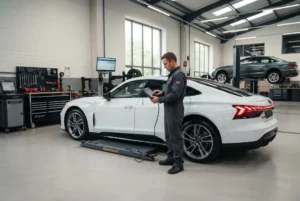
A professional alignment service normally begins with an inspection of the vehicle and tyres. The technician may check tyre pressures, steering and suspension condition before measuring wheel angles.
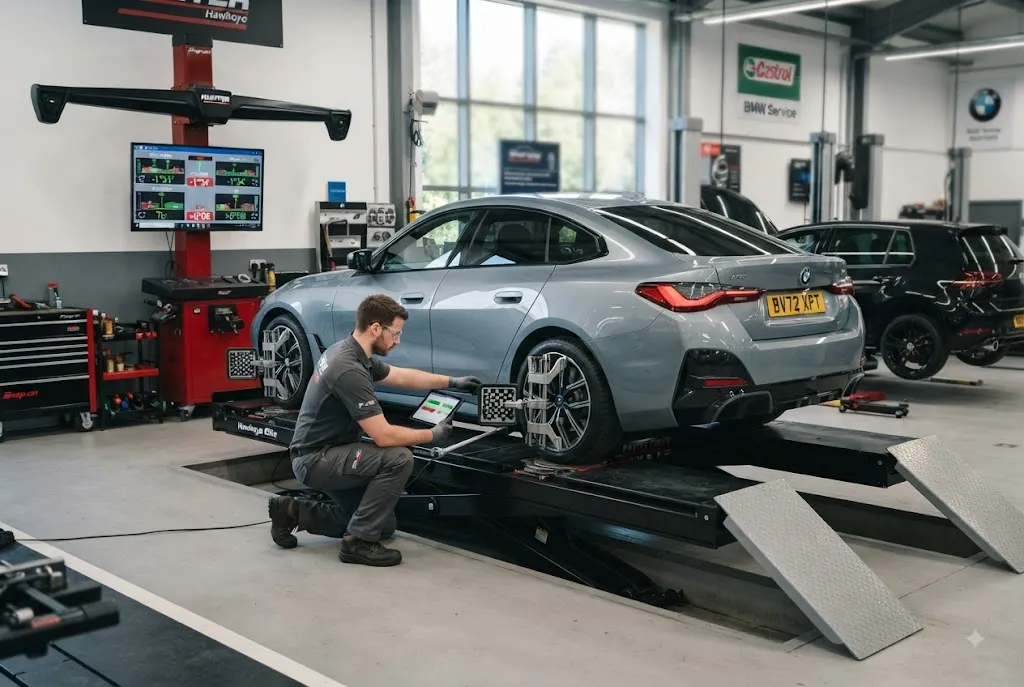
Modern alignment equipment uses sensors or targets attached to the wheels to measure their positions. The resulting readings can then be compared with the manufacturer’s specifications.
If adjustment is possible and the relevant components are in suitable condition, the technician can make the required changes and recheck the measurements.
It is important to understand that alignment equipment cannot solve every steering problem. If a suspension component is bent or worn, or a steering component has excessive play, that issue may need to be repaired before accurate alignment can be achieved.
Does Wheel Alignment Improve Tyre Life?
Correct alignment can help reduce abnormal tyre wear. When wheels are positioned correctly, the tyres can maintain the intended contact with the road rather than being forced to scrub or wear excessively on one area.
However, alignment is only one part of tyre maintenance. Incorrect tyre pressures, aggressive driving, suspension faults, braking problems, road conditions and tyre condition can also influence wear.
UK government guidance recommends checking tyre pressures weekly when the tyres are cold and confirms that cars, light vans and light trailers must have at least 1.6mm of tread across the central three-quarters of the tread and around the entire circumference. :contentReference[oaicite:4]{index=4}
Legal tread depth should not be treated as the target for replacement. Drivers should monitor tyre condition and follow manufacturer or professional recommendations before a tyre reaches the legal limit.
Wheel Alignment and Vehicle Handling
Steering and handling are closely connected to the way the wheels are positioned. A vehicle with alignment problems may feel less predictable or require more steering correction.
However, alignment is not the only factor that affects handling. Tyre pressures, tyre condition, suspension wear, steering components and road surface can all influence how a car behaves.
This is why a proper inspection is more useful than simply requesting an alignment adjustment without checking the rest of the vehicle.
If the steering feels unusual after an impact, the vehicle should be inspected promptly. Government guidance states that drivers are responsible for ensuring their vehicle is roadworthy and warns that a vehicle can be unsafe even when it has a current MOT certificate. :contentReference[oaicite:5]{index=5}
Wheel Alignment After New Tyres
New tyres do not automatically mean that a vehicle requires alignment. However, fitting new tyres provides a useful opportunity to inspect the condition of the existing wheels and suspension and identify any abnormal wear.
If the previous tyres were worn unevenly, simply fitting replacements without investigating the reason could allow the same wear pattern to return.
Drivers should therefore tell the tyre centre or garage about any previous handling issues and ask whether the tyre wear suggests an alignment or suspension problem.
Choosing a Garage for Wheel Alignment
Not every workshop provides the same alignment equipment or service. When choosing a garage, consider several factors.
Ask What Type of Alignment Is Offered
Some businesses advertise front-wheel alignment, while others provide measurements and adjustments for multiple wheels where the vehicle’s design allows it. Ask what is included before booking.
Check the Equipment
Modern alignment equipment can provide detailed measurements of wheel angles. A reputable workshop should be able to explain the results clearly rather than simply saying the vehicle needs adjustment.
Ask for Before-and-After Measurements
Where available, measurement reports can show how the vehicle compared with the relevant specifications before and after adjustment. This can make the service easier for the customer to understand.
Check for Underlying Problems
A workshop should not simply adjust alignment if there is an obvious steering or suspension fault. Ask whether the technician has inspected the relevant components before carrying out the adjustment.
Wheel Alignment as a Maintenance Reminder
Wheel alignment is not always included in routine servicing, but it can form part of a broader maintenance strategy. Drivers should think of alignment as something to investigate when the vehicle shows relevant symptoms or after events that could affect wheel positioning.
Regular tyre inspections can provide an early warning. If one tyre is wearing differently from the others, check its pressure and condition and arrange a professional inspection if the cause is unclear.
Maintaining tyres properly also supports the effectiveness of other vehicle systems. Under-inflated or over-inflated tyres can adversely affect braking and steering, according to UK road safety guidance. :contentReference[oaicite:6]{index=6}
Safety Updates for UK Drivers
Tyre and steering condition should be treated as safety matters rather than simply cosmetic maintenance issues. A vehicle that handles differently from normal deserves attention, particularly if the change appears suddenly.
Drivers should regularly inspect tyres for cuts, damage and abnormal wear. Tyre pressures should be checked according to the manufacturer’s recommendations, and the vehicle handbook should be used for model-specific maintenance information.
The GOV.UK guidance on vehicle safety also makes clear that having an MOT certificate does not remove the driver’s responsibility to keep the vehicle roadworthy. :contentReference[oaicite:7]{index=7}
An MOT is an important legal inspection, but it is not a substitute for routine maintenance or prompt investigation of new handling problems.
How Wheel Alignment Fits Into Modern Auto Services
Wheel alignment remains relevant even as the UK vehicle fleet becomes increasingly electrified. Hybrid and electric vehicles still depend on tyres, steering and suspension systems, and their weight distribution and tyre specifications can differ from conventional vehicles.
As automotive service companies expand their capabilities, alignment services are likely to remain an important part of routine tyre and vehicle maintenance.
Drivers can explore our guide to automotive service companies for more information about how UK workshop businesses are adapting to changing vehicle technology.
For motorists considering larger workshop networks, our guide to garage chains also covers major UK operators and the different services available across the sector.
Final Thoughts on Wheel Alignment
Wheel alignment can have a significant effect on tyre wear, steering response and vehicle handling. Problems may develop after pothole or kerb impacts, suspension repairs or component wear, but they can also become noticeable gradually through uneven tyre wear or an off-centre steering wheel.
Drivers should not assume that every handling issue is caused by alignment. Tyre pressures, brakes, steering and suspension components can produce similar symptoms, which is why a professional inspection is often the safest approach.
Regular tyre checks, attention to new handling changes and prompt investigation of unusual wear can help prevent avoidable problems. When an alignment check is required, choose a workshop with suitable equipment and ask for a clear explanation of the measurements and any recommended repairs.
For UK motorists, wheel alignment is ultimately part of a wider approach to vehicle safety. Keeping tyres correctly maintained and ensuring steering and suspension systems remain in good condition can help a vehicle handle as intended and support safer, more predictable driving.