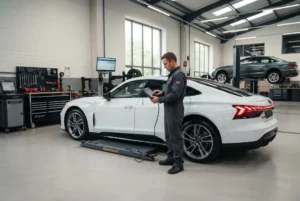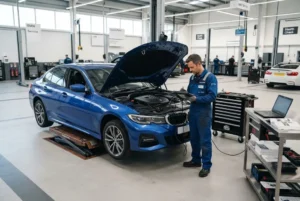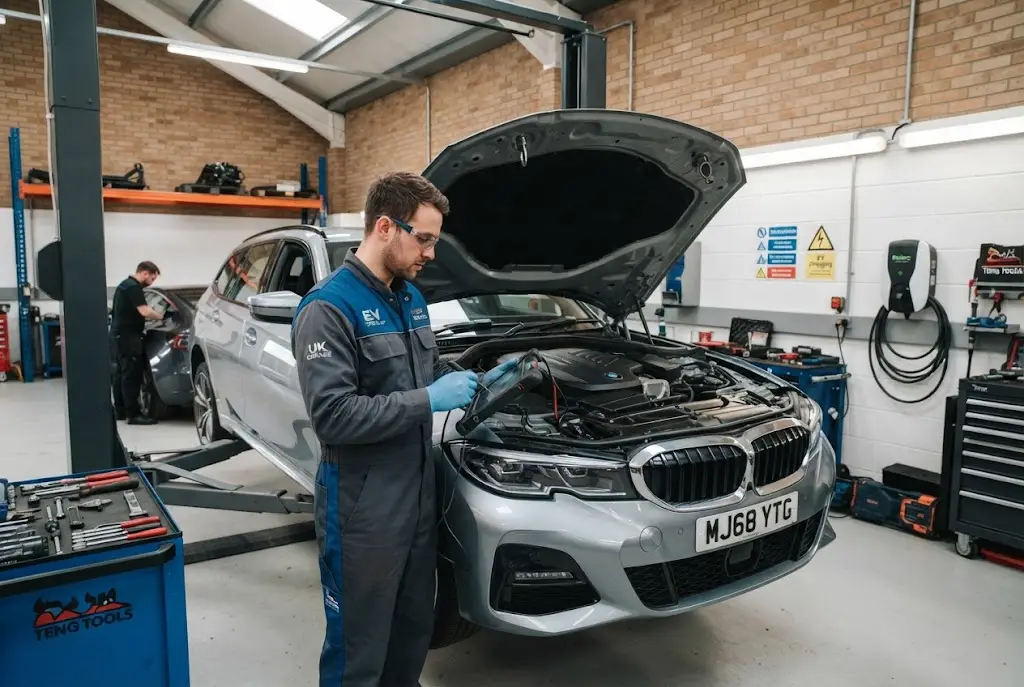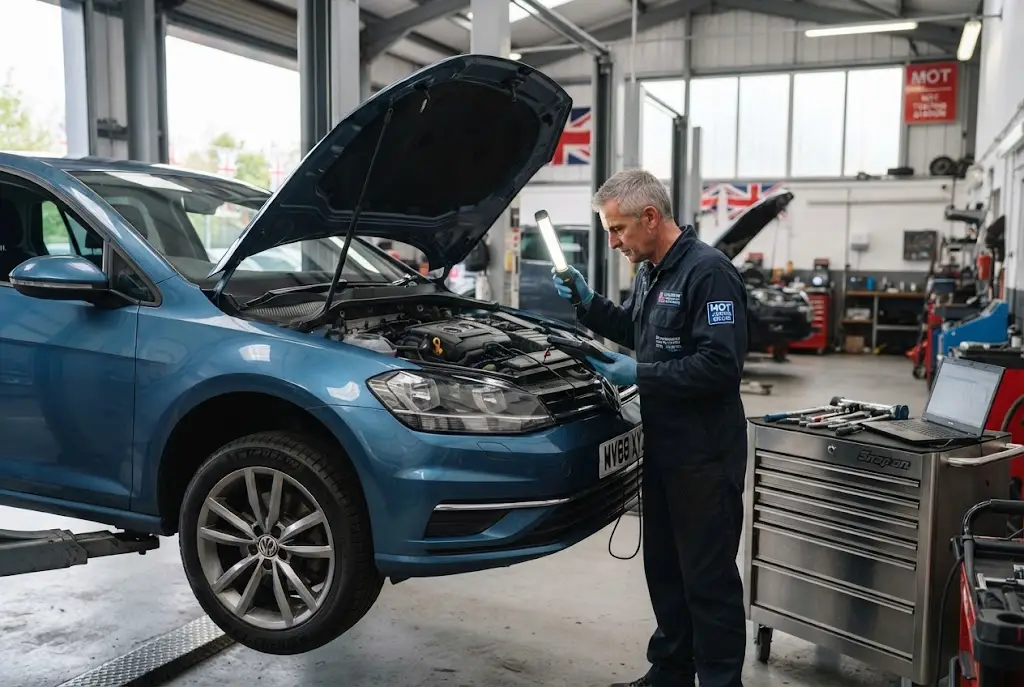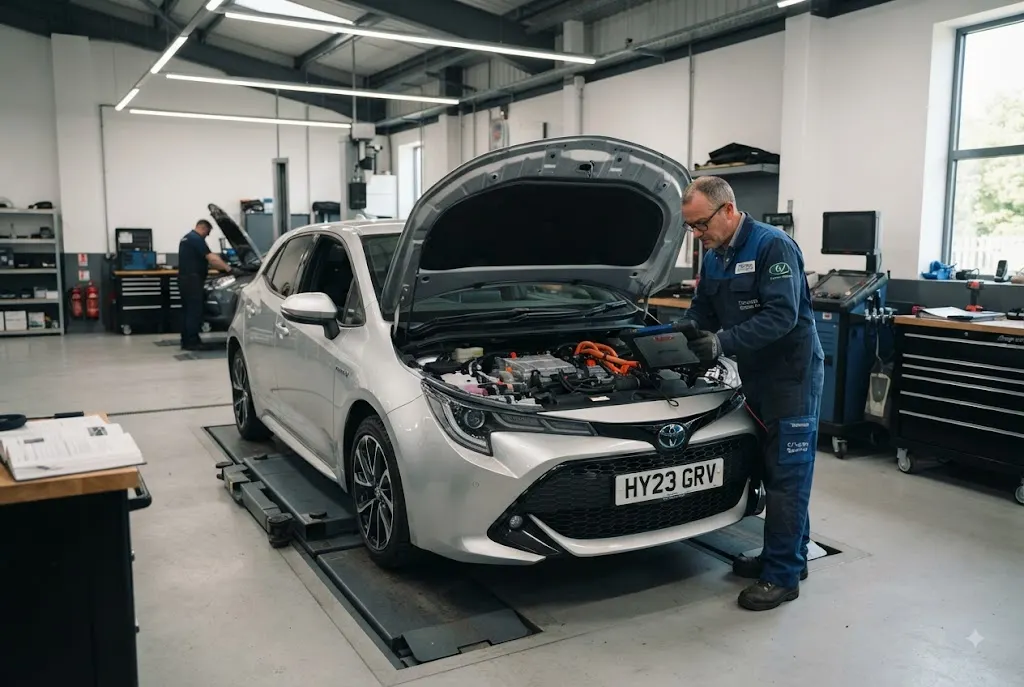
Hybrid servicing is becoming an increasingly important part of vehicle maintenance in the UK as more drivers choose cars that combine an internal combustion engine with electric motor technology. While hybrid vehicles share many maintenance requirements with conventional cars, their electrical systems, battery packs and regenerative braking technology introduce additional considerations.
For owners, regular maintenance remains essential. The right service can help identify developing faults, maintain vehicle efficiency and ensure important hybrid components are inspected by technicians with suitable training and equipment. At the same time, developments in battery technology and the wider EV transition are changing what drivers can expect from automotive workshops.
What Does Hybrid Servicing Involve?
Hybrid servicing covers the conventional maintenance required by a petrol or diesel vehicle alongside checks appropriate to its hybrid system. The exact requirements depend on the manufacturer, model and type of hybrid powertrain.
Routine work can include engine oil and filter changes, brake inspections, tyre checks, suspension inspections and other scheduled maintenance. However, technicians may also need to inspect the hybrid battery system, electrical components, cooling systems and related warning systems.
Regenerative braking can also affect maintenance patterns. Because the electric motor can help slow the vehicle, some hybrid cars may place different demands on conventional friction brakes. That does not mean brakes can be ignored. Pads, discs, brake fluid and associated components still require appropriate inspection.
Why Hybrid Servicing Is Different
A hybrid vehicle combines technologies that require different forms of technical knowledge. A technician may be working around a conventional combustion engine, high-voltage electrical components, an electric motor and sophisticated electronic control systems during the same diagnostic process.
That is why owners should make sure the workshop they choose has the appropriate hybrid training and equipment for their vehicle.
Not every service requires work on the high-voltage system. Many routine maintenance tasks remain similar to those performed on conventional cars. However, specialist procedures should be handled according to the manufacturer’s requirements and appropriate safety standards.
How Often Should Hybrid Cars Be Serviced?
There is no single service interval that applies to every hybrid vehicle. Drivers should follow the manufacturer’s recommended schedule because requirements vary by model.
Toyota provides a useful example. Toyota UK states that its hybrid cars should generally be serviced every 12 months or 10,000 miles, whichever comes first. The manufacturer also says that an annual Toyota Hybrid Service includes checks of the hybrid system and battery. :contentReference[oaicite:0]{index=0}
Other manufacturers can specify different intervals, so owners should check the vehicle handbook, manufacturer’s service schedule or authorised servicing information rather than assuming that every hybrid follows the same timetable.
Keeping service records is also valuable. A clear maintenance history can help demonstrate that the vehicle has been properly maintained and may be useful when the car is eventually sold.
Toyota Hybrid Service: What Owners Should Know
Toyota has one of the most established hybrid vehicle ranges in the UK, making Toyota hybrid service an important consideration for many owners. Models such as the Yaris Hybrid, Corolla Hybrid, C-HR Hybrid, RAV4 Hybrid and other Toyota hybrids use dedicated hybrid systems that require appropriate diagnostic knowledge.
Toyota UK says its Hybrid Service includes inspection of the hybrid system and battery. It also states that completing the qualifying annual service can provide an additional year or 10,000 miles of Hybrid Battery Extended Cover, subject to the applicable terms, up to a stated maximum of 15 years. :contentReference[oaicite:1]{index=1}
This illustrates why owners should examine the specific benefits associated with manufacturer servicing. A service is not simply an oil change; depending on the vehicle and manufacturer programme, it can include checks that are particularly relevant to the hybrid powertrain.
Independent workshops can also provide hybrid maintenance, provided they have suitable equipment, training and knowledge for the vehicle concerned. RAC, for example, offers hybrid servicing through its approved garages and mobile mechanics and specifically lists several Toyota hybrid models among the vehicles it can service. :contentReference[oaicite:2]{index=2}
Hybrid Battery Checks and Maintenance
The hybrid battery is one of the most important components to understand when owning a hybrid vehicle. Unlike a conventional starter battery, the traction battery is part of the vehicle’s high-voltage propulsion system and plays a central role in how the car operates.
Battery condition can be assessed through appropriate diagnostic procedures. Depending on the vehicle, technicians may examine battery performance, system warnings, cooling arrangements and other indicators of hybrid-system health.
Drivers should not attempt to dismantle or repair a high-voltage battery themselves. Specialist battery work should be carried out by appropriately trained technicians using the correct procedures and equipment.
Battery technology is also developing quickly. Newer hybrid and electric vehicles use increasingly sophisticated battery management systems designed to control temperature, charging and power delivery. As a result, workshop diagnostics are becoming an increasingly important part of modern vehicle maintenance.
Warning Signs That a Hybrid Needs Attention
Hybrid vehicles can provide warning signs when something is not operating correctly. Drivers should pay attention to changes in vehicle behaviour and dashboard alerts rather than waiting for a scheduled service.
Hybrid System Warning Lights
A hybrid-system warning light can indicate an issue that requires professional diagnosis. The precise meaning depends on the manufacturer and model, so owners should consult the vehicle documentation and seek appropriate assistance.
Unexpected Changes in Fuel Economy
A significant unexplained change in fuel consumption can sometimes indicate that a vehicle needs inspection. However, fuel economy also varies with weather, driving style, traffic, tyre pressure and journey conditions.
Unusual Engine Behaviour
Hybrid vehicles frequently switch between electric and engine power. Drivers become familiar with these transitions over time. If the engine behaves unusually, runs excessively or the vehicle develops new noises or vibrations, a workshop inspection may be appropriate.
Changes in Braking
Hybrid braking can feel different because regenerative braking works alongside conventional friction brakes. Any significant change in braking performance, unusual noises or warning lights should be investigated promptly.
Hybrid Services and Conventional Maintenance
One common misconception is that hybrid vehicles require completely different maintenance from ordinary cars. In reality, a large amount of routine work remains familiar.
Hybrid vehicles still have tyres, suspension components, steering systems, brake components and, in many cases, an internal combustion engine with fluids and filters that require maintenance.
The difference is that technicians must understand how these components interact with the hybrid system. A fault that appears mechanical may sometimes involve an electronic control system, while diagnostic equipment may be needed to identify the underlying cause.
This is one reason choosing a suitable workshop is more important than simply selecting the cheapest advertised service.
Choosing a Garage for Hybrid Servicing
When comparing hybrid services, drivers should look beyond the headline price.
Check Hybrid Training
Ask whether technicians are trained to work on the relevant hybrid system. This is particularly important when the job involves high-voltage components or hybrid battery diagnostics.
Ask About Diagnostic Equipment
Modern hybrid vehicles depend heavily on electronic control systems. A workshop needs appropriate diagnostic equipment to identify faults accurately.
Understand What the Service Includes
Two garages may advertise a “hybrid service” while including different checks. Ask for a clear list of the inspections and maintenance included in the price.
Check Warranty Implications
If your vehicle remains under a manufacturer’s warranty or battery-care programme, check the relevant terms before booking servicing. Some manufacturers provide specific conditions for maintaining additional battery cover.
Keep Your Service Records
Keep invoices, service reports and other maintenance documentation. These records provide evidence of the vehicle’s history and can be useful when troubleshooting future problems or selling the car.
Hybrid Servicing and Battery Technology
Battery technology is becoming increasingly important across the automotive sector. Hybrid vehicles helped introduce many motorists to electric propulsion while retaining an internal combustion engine, and modern systems continue to evolve.
For workshops, this means the skills required to diagnose and maintain electrified vehicles are becoming more important. Battery management, thermal control, electrical diagnostics and high-voltage safety are increasingly relevant areas of technical training.
The used vehicle market is also creating new demand for specialist battery expertise. In August 2026, BCA announced the opening of what it described as the UK’s first EV Battery Repair Centre for remarketing, providing specialist battery repair capabilities for used electric vehicles. Although the facility focuses on EVs rather than conventional hybrid servicing, the development demonstrates the growing importance of specialist battery repair within the wider aftermarket. :contentReference[oaicite:3]{index=3}
As battery expertise becomes more widespread, owners could eventually have more options beyond complete battery replacement when dealing with certain battery-related faults. However, the appropriate repair depends on the vehicle, battery design, fault and manufacturer’s technical requirements.
Hybrid Servicing and the UK EV Transition
Hybrid vehicles occupy an important position in the UK’s transition towards electrified transport. They give drivers access to electric propulsion while retaining an engine, although different types of hybrid provide very different driving and charging experiences.
Self-charging hybrids generate electrical energy through regenerative braking and the vehicle’s hybrid system rather than requiring regular plug-in charging. Plug-in hybrids have larger batteries and can be charged externally, allowing them to complete some journeys using electric power alone.
Toyota explains that its self-charging hybrids do not need to be plugged in and also offers plug-in hybrid and battery-electric models. :contentReference[oaicite:4]{index=4}
The distinction matters for servicing because the technology and operating patterns differ. It also matters for drivers considering their next vehicle. A hybrid may represent a transition between conventional and fully electric motoring, while a battery-electric car removes the combustion engine entirely.
For motorists already considering that next step, our guide to EV servicing explains how electric vehicle maintenance differs from conventional and hybrid servicing.
Do Hybrid Cars Need Specialist Garages?
Not every routine job on a hybrid requires a specialist hybrid centre. Many standard maintenance tasks can be performed by capable workshops that understand the vehicle.
However, specialist knowledge becomes much more important when a repair involves the high-voltage system, hybrid battery, electric motor or associated electrical components.
Drivers should therefore match the workshop to the job. A basic tyre replacement and a high-voltage battery diagnosis are very different tasks and should not be treated as equivalent when choosing a garage.
Large networks are increasingly offering hybrid services. Halfords Autocentres, for example, currently advertises a comprehensive hybrid service and says its technicians have access to hybrid servicing equipment across its network. :contentReference[oaicite:5]{index=5}
This growing availability means hybrid owners have more choice, but checking exactly what a workshop can safely and professionally handle remains essential.
Hybrid Maintenance Tips for UK Drivers
Good maintenance begins with following the manufacturer’s service schedule. Beyond that, owners can take several simple steps to support reliable operation.
- Follow the manufacturer’s recommended service intervals.
- Do not ignore hybrid-system warning lights.
- Check tyre pressures regularly.
- Pay attention to changes in braking performance or vehicle handling.
- Use a suitably trained workshop for hybrid-system repairs.
- Keep service and repair records.
- Ask questions before authorising expensive battery-related work.
Owners should also remember that driving conditions affect vehicle efficiency. Short journeys, heavy traffic, cold weather, high speeds and aggressive acceleration can all influence fuel consumption, so one change in economy does not automatically indicate a battery problem.
What Hybrid Owners Should Watch in 2026
The hybrid service market is likely to continue changing as more electrified vehicles enter the UK vehicle fleet. Workshops will need to maintain expertise across several powertrain types rather than focusing solely on petrol and diesel technology.
Battery diagnostics are likely to become increasingly important as older hybrid and electric vehicles move through the used-car market. At the same time, specialist repair facilities could create more alternatives to complete battery replacement where technically appropriate.
Government and industry decisions around the wider EV transition may also influence consumer demand for hybrids. Recent UK debate has included questions around charging access, plug-in hybrid usage and the pace of the transition to fully electric vehicles. :contentReference[oaicite:6]{index=6}
For garages, that uncertainty makes flexibility valuable. A workshop capable of servicing conventional cars, hybrids and EVs can potentially serve a broader customer base as vehicle ownership patterns change.
Final Thoughts on Hybrid Servicing
Hybrid servicing is becoming a mainstream requirement rather than a niche specialist service. The basic maintenance of a hybrid can often resemble that of a conventional car, but the presence of high-voltage batteries, electric motors and sophisticated control systems means technicians need additional knowledge and appropriate equipment.
Toyota hybrid service programmes demonstrate how manufacturers are incorporating dedicated battery and hybrid-system checks into scheduled maintenance, while independent networks and major garage groups are expanding their own hybrid capabilities.
For UK drivers, the most sensible approach is straightforward: follow the manufacturer’s maintenance schedule, use a workshop equipped for the vehicle and make sure any high-voltage work is handled by appropriately trained professionals.
As battery technology develops and the UK continues its broader EV transition, hybrid servicing will remain an important part of the automotive aftermarket. Understanding what the service includes and choosing the right workshop can help owners maintain their vehicles with greater confidence.