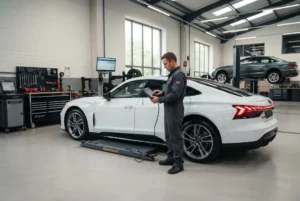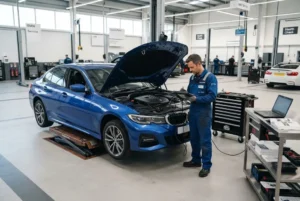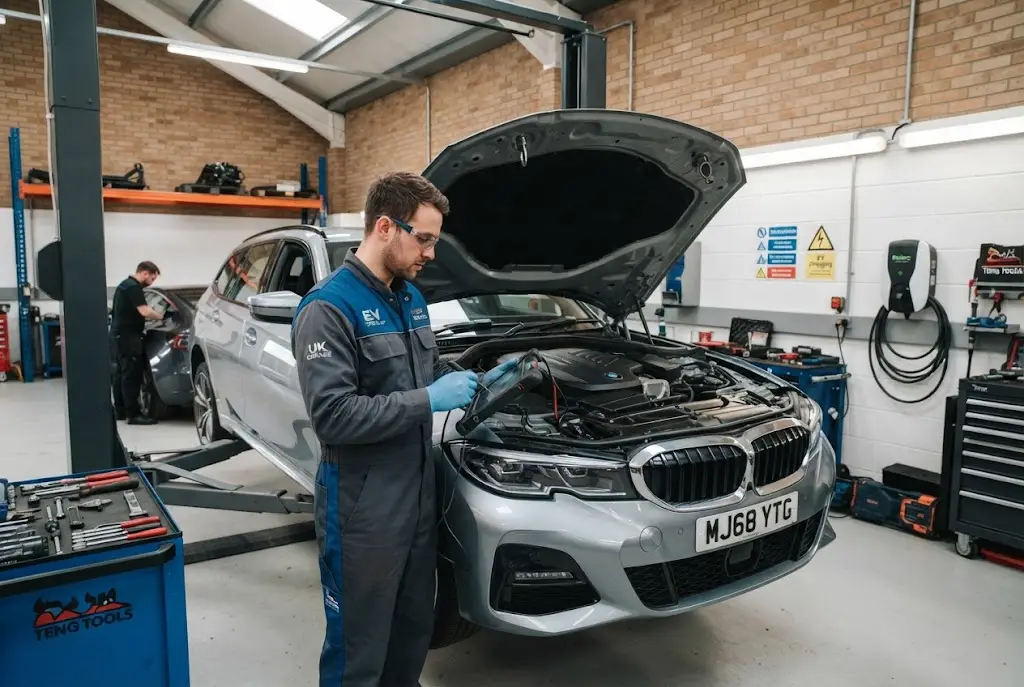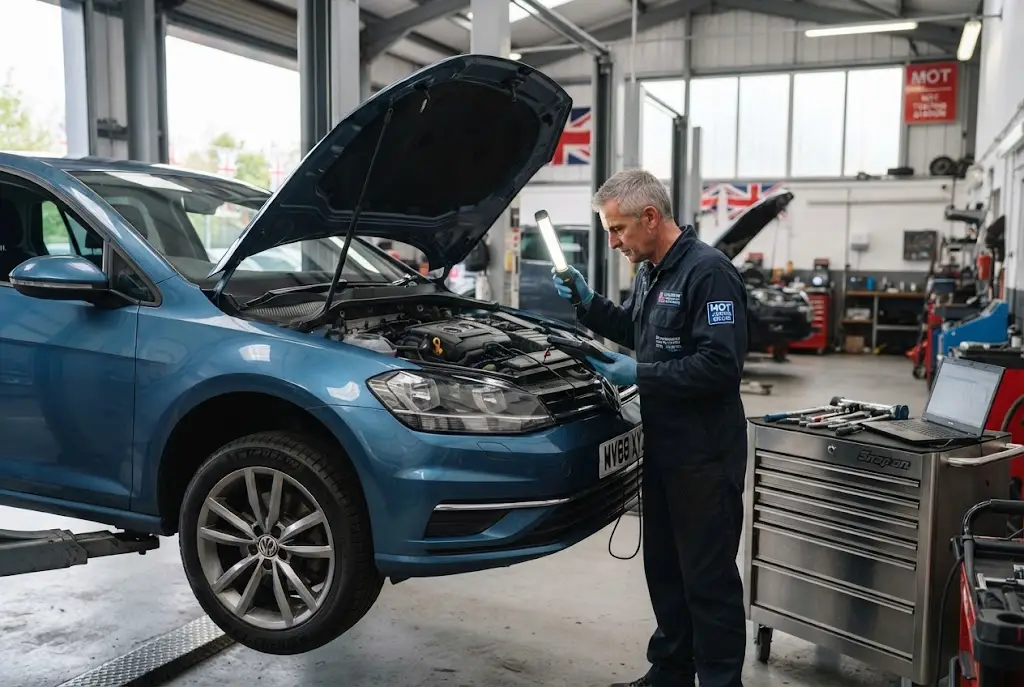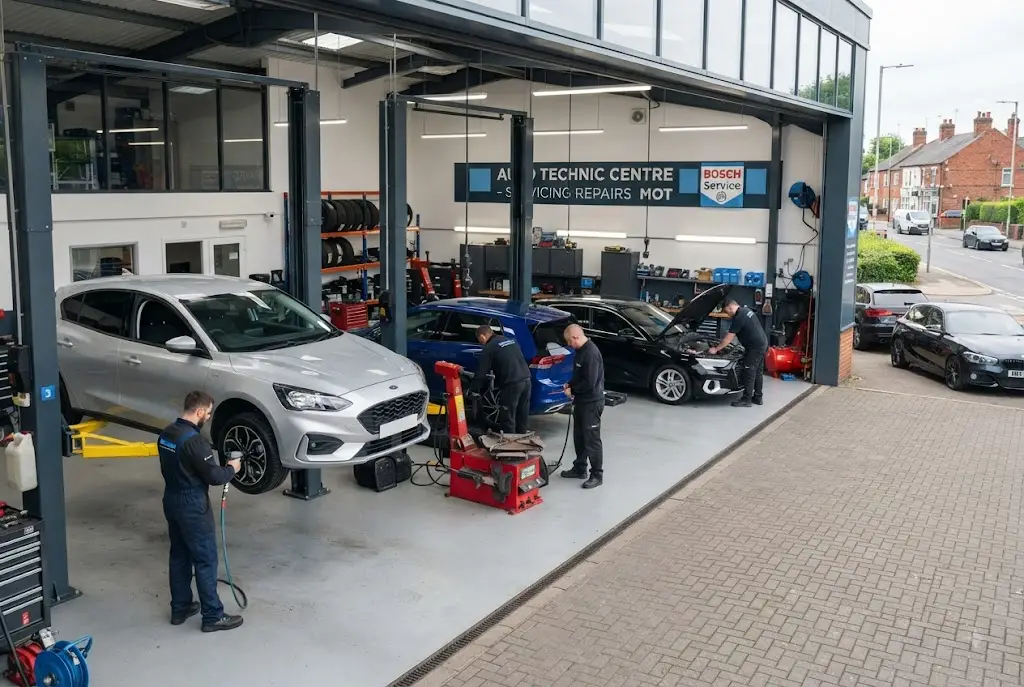
Garage chains play an important role in the UK automotive aftermarket, giving motorists access to familiar names for tyres, MOT testing, servicing, repairs and vehicle maintenance. From nationwide fast-fit networks to specialist body repair groups, the garage sector includes businesses with very different strengths and service models.
For drivers, choosing between a large chain and an independent garage often comes down to convenience, price, location, available equipment and the type of work required. Meanwhile, changes across the industry are reshaping the competitive landscape, with acquisitions, network expansion and business closures continuing to influence where motorists can get their vehicles serviced.
What Are Garage Chains?
Garage chains are automotive service businesses operating multiple workshops under the same brand or within a wider group. Their networks can range from a few regional sites to hundreds of centres spread across the UK.
Large garage chains commonly provide services such as tyre fitting, MOT testing, vehicle servicing, brakes, exhausts, batteries, air conditioning and general mechanical repairs. Some businesses focus on specific areas. For example, body repair networks specialise in accident damage, while fast-fit operators tend to concentrate on routine maintenance and replacement components.
The scale of these businesses can make them attractive to motorists who want a recognisable brand and an easy-to-find branch. However, the quality of customer experience can still vary between individual locations, so drivers should consider the specific garage, service required and terms of the work rather than relying on the brand name alone.
The Biggest Garage Chains in the UK
The UK market includes several major names, although their size, ownership and areas of specialism are not identical. The following businesses illustrate the different models found across the sector.
Kwik Fit
Kwik Fit is one of the most recognisable garage chains in the UK. The company says it operates more than 600 centres across the UK and Northern Ireland, providing services including tyres, brakes, exhausts, batteries, MOT testing, servicing and air conditioning.
Its extensive network makes Kwik Fit particularly relevant to motorists looking for a conveniently located fast-fit centre. The business has also invested in upgraded premises and workshop technology, including advanced wheel alignment equipment at many of its locations.
For motorists, its broad service offering means the same network can potentially handle everything from a tyre replacement to routine servicing and more complex mechanical work at specialist locations.
Halfords Autocentres
Halfords is another major name in the UK’s automotive service market. While many consumers associate the company with retail motoring products, its Autocentres operation provides servicing, MOT testing, repairs, tyres and other vehicle maintenance services.
Halfords also provides a mixture of workshop and mobile motoring services, giving customers additional flexibility. Its broader automotive ecosystem means motorists can access parts, accessories and workshop services through the same well-known brand.
The company has also become increasingly significant through its ownership of National Tyres and Autocare, bringing another established fast-fit network into the wider Halfords family.
National Tyres & Autocare
National Tyres & Autocare has a long-standing position in the UK fast-fit market and is now part of the Halfords group. The business specialises in tyres and vehicle maintenance, with services covering areas such as brakes, exhausts, batteries, MOT testing, safety inspections and car servicing.
The relationship between National Tyres & Autocare and Halfords is an important example of how acquisitions can reshape the UK’s garage landscape. Rather than treating every brand as an entirely separate competitor, motorists increasingly need to understand the ownership and network structure behind major automotive service companies.
For a wider look at how the sector is changing, our guide to automotive service companies can provide useful context on business developments, expansions and industry activity.
Protyre
Protyre is another established name in the UK automotive aftermarket, with a strong focus on tyres and associated vehicle services. Its network model combines tyre expertise with services such as MOT testing, servicing, brakes and other maintenance work.
Tyres remain a central part of the fast-fit market because they directly affect braking, grip and vehicle handling. UK drivers must also ensure their tyres meet legal requirements. For cars, light vans and light trailers, the minimum legal tread depth is 1.6mm across the central three-quarters of the tread and around the entire circumference.
However, legal compliance is only the starting point. Drivers should also pay attention to tyre pressure, visible damage and uneven wear. If a vehicle develops unusual tyre wear, steering problems or handling changes, further inspection may be necessary.
Fix Auto UK
Fix Auto occupies a different position from traditional fast-fit garage chains. Its UK network focuses primarily on accident and body repair rather than routine tyre fitting and general servicing.
The network uses independently owned and managed repair centres operating under the Fix Auto brand. Its UK operation states that it has more than 130 locations and that its body shops are certified to British Standard BS 10125.
This makes Fix Auto an important part of the wider garage and automotive repair landscape, particularly for motorists dealing with collision damage, dents, scratches, alloy wheel damage and post-accident repairs.
ATS Euromaster and a Changing UK Network
ATS Euromaster was historically one of the UK’s best-known tyre and automotive service networks. However, its UK story has changed significantly in 2026.
The company announced a structured wind-down of its UK operations after concluding that it could not find a viable route back to profitability. Parts of the network were subsequently transferred to other operators, including Formula One Autocentres, while other locations ceased trading.
This is an important reminder that the list of major garage chains is not static. Acquisitions, closures and network transfers can quickly change the choices available to motorists in a particular town or region.
Fast Fit Autocentres and Regional Networks
The phrase “fast fit” also covers numerous regional and independent networks rather than one single nationwide company. Businesses operating under names such as Fast Fit Autocentres can serve particular local markets, often competing by combining personal service with the convenience of a multi-site operation.
Regional networks can be especially important where motorists want an alternative to the largest national brands. Their geographic footprint may be smaller, but they can still offer MOT testing, servicing, tyres, brakes and general repairs.
Why Garage Chains Remain Popular
One of the biggest advantages of garage chains is convenience. A large network gives customers more opportunities to find a workshop close to home, work or a regular travel route.
National operators can also provide online booking, centralised customer support and standardised service menus. This can make it easier for motorists to compare available services before booking an appointment.
Another advantage is access to modern diagnostic and workshop equipment. As vehicles become more electronically complex, garages need appropriate tools and technician training to diagnose faults correctly.
That becomes even more important as the UK vehicle fleet changes. Hybrid and electric cars require different knowledge and equipment from many conventional petrol and diesel vehicles. Drivers interested in this transition can also explore our dedicated guide to hybrid servicing.
Garage Chains vs Independent Garages
There is no universal answer to whether a garage chain or an independent workshop is better. Both can have advantages depending on the vehicle and the job involved.
Garage chains often provide extensive opening hours, online booking, recognisable branding and broad geographic coverage. Independent garages may offer a more personal relationship with customers and can sometimes specialise in particular vehicle makes or repair types.
Price is also not always predictable. A national brand may have promotional offers, while an independent garage may have lower overheads for certain repairs. The best approach is to compare like-for-like quotations and establish exactly what is included.
When comparing garages, motorists should ask what parts will be used, whether labour is included, what warranty applies and whether additional work requires approval before it is carried out.
What to Check Before Choosing a Garage Chain
Check the Exact Service Required
Start by identifying what your vehicle actually needs. A tyre replacement, MOT, routine service, wheel alignment and accident repair are different jobs and may be better suited to different types of workshops.
Compare the Full Price
A headline price does not always represent the final bill. Ask whether fitting, disposal, balancing, diagnostic work or additional parts are included. For larger repairs, request a written quotation before authorising the work.
Look at the Individual Branch
Large brands operate through multiple locations, and customer experiences can differ between branches. Consider recent local reviews, appointment availability and the specific services offered by the centre you intend to use.
Ask About Warranty and Guarantees
Before paying for significant repairs, understand what guarantee applies to the parts and labour. Keep your invoice and any inspection or service documentation in case you need to return to the garage.
Do Not Ignore Safety Issues
Tyres, steering, brakes and suspension can have a direct effect on vehicle safety. Government guidance states that drivers are responsible for ensuring their vehicle is roadworthy, even when it has a current MOT certificate.
Uneven tyre wear can sometimes be linked to braking or suspension faults, or wheels that are out of alignment. If you notice significant handling changes, unusual wear or a vehicle pulling to one side, it is sensible to have the car inspected rather than continuing to drive without checking the cause.
The Future of UK Garage Chains
The UK’s garage sector is likely to continue evolving as the vehicle fleet changes. Traditional servicing remains important, but garages are increasingly dealing with advanced driver assistance systems, electronic diagnostics, hybrid powertrains and electric vehicles.
This creates opportunities for larger networks that can invest in technician training, diagnostic equipment and new workshop capabilities. At the same time, independent garages and regional operators can compete by developing specialist expertise and maintaining strong local relationships.
The shift towards electric vehicles will be particularly significant. EV servicing involves different maintenance requirements from conventional cars, while battery systems and high-voltage components require appropriate training and safety procedures. Our guide to EV servicing explores this changing area in more detail.
Why Company News Matters to Motorists
Garage company news is not just relevant to investors and industry professionals. Acquisitions, closures and expansions can directly affect motorists by changing which workshops operate in their local area.
A garage changing ownership may continue operating under a familiar name, while a closed site can leave customers looking for an alternative workshop. Similarly, a major expansion can create more booking capacity and improve access to particular services.
For this reason, keeping an eye on company news can help drivers understand the wider automotive service market rather than simply choosing a garage based on proximity.
Final Thoughts on Garage Chains
The UK’s garage chains form a diverse part of the automotive aftermarket. Kwik Fit and Halfords provide extensive nationwide coverage, National Tyres & Autocare adds another major tyre and maintenance network within the Halfords group, while Protyre and regional fast-fit businesses provide further competition.
Fix Auto demonstrates that large automotive networks can also specialise in accident repair, while the recent changes involving ATS Euromaster show how quickly the structure of the market can change.
For motorists, the most important consideration is not simply whether a garage is part of a large chain. The right choice depends on the required service, the reputation of the individual branch, the price, the qualifications and equipment available, and the clarity of the quotation. By comparing those factors, drivers can make more informed decisions about maintaining their vehicles safely and efficiently.