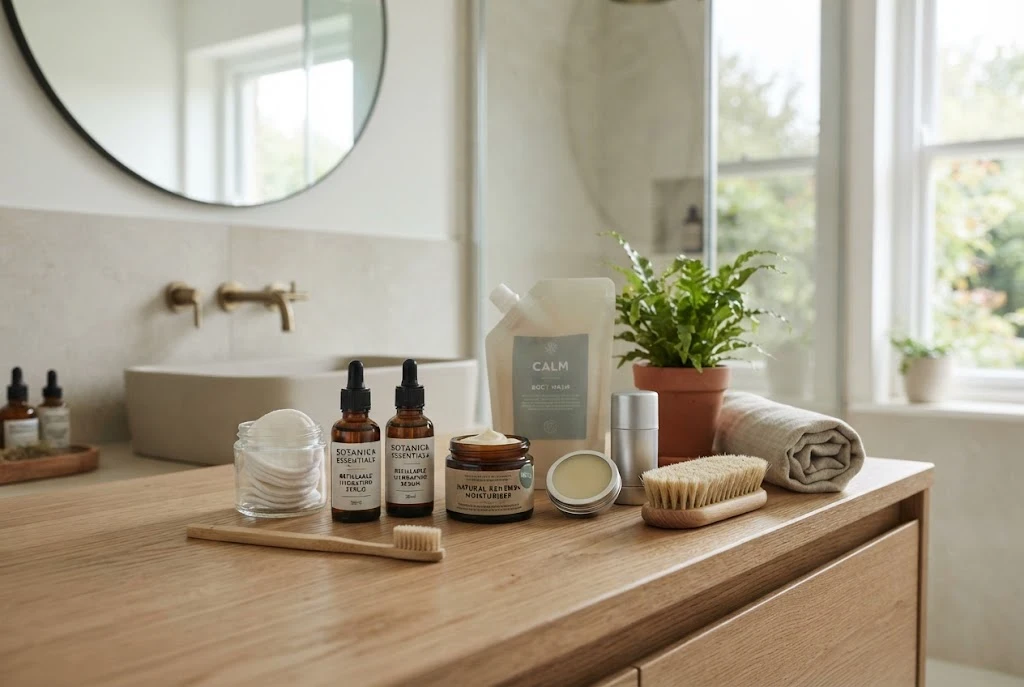
Sustainable beauty is becoming an increasingly important part of the modern beauty conversation. Across the UK, consumers are paying greater attention to how skincare, cosmetics and personal care products are made, packaged, used and disposed of. However, making beauty more sustainable is not simply about choosing a product labelled “green” or “eco-friendly”. It involves understanding ingredients, packaging, waste, purchasing habits and the wider environmental impact of a beauty routine.
The good news is that sustainable beauty does not require completely replacing everything in your bathroom. Small, practical changes can reduce unnecessary waste while helping consumers make more considered purchasing decisions.
What Is Sustainable Beauty?
Sustainable beauty refers to approaches to cosmetics and personal care that aim to reduce environmental impact while maintaining useful product performance and responsible consumption. The concept can include sustainable skincare, cosmetics, packaging, manufacturing, sourcing and disposal.
There is no single definition that applies equally to every product. Sustainability can involve several different considerations, such as the materials used in packaging, the resources required during manufacturing, transportation, product lifespan and what happens when the product is finished.
As a result, a genuinely sustainable beauty routine is usually about making informed choices across several areas rather than finding one perfect product.
Why Sustainable Beauty Matters in the UK
Beauty products are part of everyday life for millions of consumers, which means purchasing and disposal habits can collectively have an environmental impact. Packaging, transportation, manufacturing and unused products all contribute to the broader footprint of the sector.
At the same time, consumers have more information available than ever before. People can investigate ingredients, packaging materials and company policies before purchasing, although marketing claims can sometimes make comparisons difficult.
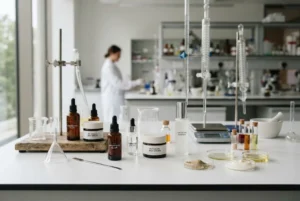
This is why evidence matters. Research into beauty products and their environmental characteristics can provide more useful information than relying on attractive sustainability language alone. The wider scientific side of beauty is explored in our guide to beauty research.
Sustainable Skincare and Smarter Routines
Sustainable skincare begins with the routine itself. Consumers often focus on finding environmentally responsible products while overlooking how many products they actually purchase and use.
A simpler routine can sometimes be a practical sustainability strategy. Buying products that serve a clear purpose, using them consistently and finishing them before purchasing replacements can reduce unnecessary consumption.
That does not mean everyone needs the same routine. Skin needs and personal preferences vary, so the objective should be a routine that works effectively without encouraging unnecessary product accumulation.
Using Products to the End
One straightforward habit is to use products fully before replacing them where appropriate. Partially used bottles and jars can become a source of waste when consumers repeatedly switch to new products because of trends or attractive launches.
Keeping track of what you already own can help prevent duplicate purchases. It can also make your beauty routine easier to manage.
Sustainable Cosmetics and Ingredient Choices
Sustainable cosmetics can involve decisions about ingredients, sourcing, formulation and manufacturing. However, judging sustainability from an ingredient list alone can be difficult.
An ingredient’s environmental impact may depend on how it is sourced, processed, transported and incorporated into a finished product. The same is true of packaging and manufacturing.
This makes cosmetic ingredient research an important part of understanding sustainability claims. Consumers should be cautious about simple lists that divide every ingredient into “sustainable” and “unsustainable” categories without explaining the wider context.
Scientific research can provide useful information about cosmetic ingredients, but environmental assessment often requires considering the entire product lifecycle rather than one ingredient in isolation.
Eco Friendly Beauty Packaging
Packaging is one of the most visible sustainability issues in the beauty industry. Bottles, jars, tubes, boxes, pumps and protective materials all require resources and eventually need to be managed as waste.
Eco friendly beauty packaging can take different forms, including reduced packaging, recyclable materials, refill systems and reusable formats. However, consumers should look beyond labels and consider how a packaging system actually works in practice.
A package may be technically recyclable but difficult to recycle through ordinary household systems. Similarly, a refill concept may reduce packaging only if consumers actually purchase and use refills instead of replacing the original container.
Why Packaging Design Matters
Good packaging needs to protect a product as well as minimise unnecessary material use. This is particularly important for cosmetics and skincare because packaging can help protect formulations from contamination, damage, light or air.
The sustainability question is therefore not simply about using less material. It is about finding an appropriate balance between product protection, usability, durability and environmental impact.
Zero Waste Beauty: What Does It Really Mean?
Zero waste beauty is an approach that aims to minimise the amount of beauty-related material sent to waste. In practice, completely eliminating waste can be difficult, particularly because cosmetics and skincare require packaging and specialised formulations.
Instead of treating zero waste as an all-or-nothing target, consumers can use it as a framework for reducing unnecessary waste.
- Finish products before buying replacements.
- Avoid buying products simply because they are trending.
- Choose packaging formats that suit available recycling or reuse systems.
- Consider refill options when they are practical.
- Buy appropriate quantities rather than accumulating products.
- Follow disposal instructions for products and packaging.
These habits can make a difference without requiring an unrealistic approach to everyday beauty.
Circular Beauty and Reusing Resources
Circular beauty is based on the broader idea of keeping materials and products in use for as long as practical while reducing waste. In the beauty sector, this can involve refillable packaging, reusable containers and approaches designed around longer product lifecycles.
The circular model challenges the traditional pattern of buying, using and discarding. Instead, businesses can explore ways to design products and packaging so that materials remain useful for longer.
For consumers, circular beauty can mean considering what happens after a product is finished rather than focusing exclusively on the purchasing stage.
Understanding the Beauty Carbon Footprint
The beauty carbon footprint refers broadly to greenhouse gas emissions associated with beauty products and their lifecycle. These emissions can arise from manufacturing, energy use, transportation, packaging and other stages of a product’s journey.
It is difficult for consumers to calculate the complete footprint of an individual cosmetic simply by looking at its packaging. A full assessment may require information across the entire supply chain.
Nevertheless, consumers can think about carbon impact when making broader choices. Buying fewer unnecessary products, avoiding waste and considering product longevity can all support more thoughtful consumption.
Does Buying Less Count as Sustainable Beauty?
Yes. Sustainable beauty is not necessarily about buying a replacement for every conventional product. In many cases, purchasing less can be one of the simplest ways to reduce the resources associated with consumption.
Beauty marketing frequently introduces new launches, seasonal collections and limited editions. These can be enjoyable, but consumers can ask whether a new purchase fills a genuine need or simply adds another product to an already crowded routine.
A smaller collection of products that are used regularly can be more practical than a large collection containing items that are rarely finished.
How to Evaluate Sustainable Beauty Claims
Consumers encounter terms such as natural, green, clean, eco-friendly, responsible and sustainable across beauty marketing. These terms do not always provide enough information to determine the environmental performance of a product.
A useful approach is to ask specific questions:
- What exactly makes the product more sustainable?
- Is the claim supported by clear information?
- What materials are used for the packaging?
- Can the packaging realistically be reused or recycled?
- Does the company explain its environmental approach?
- Is the claim about one part of the product or its wider lifecycle?
This approach helps consumers move beyond labels and examine the substance behind sustainability claims.
Sustainable Beauty and British Consumer Culture
The growth of sustainable beauty also reflects changing attitudes within British beauty culture. Consumers are exposed to international trends while developing their own preferences around convenience, value, appearance and responsible consumption.
Some shoppers may prioritise refillable packaging, while others may focus on reducing the number of products they buy. These different approaches can coexist because sustainability is influenced by lifestyle and practical circumstances.
For more context on how beauty habits and preferences have developed in Britain, see our guide to British beauty culture.
Technology and Research in Sustainable Beauty
Technology may play an important role in improving the sustainability of beauty products. Better formulation techniques, packaging innovation, digital product information and improved manufacturing processes can all contribute to more efficient systems.
Research can also help companies assess materials and processes more carefully. As the beauty industry becomes increasingly evidence-led, sustainability decisions may depend more heavily on lifecycle information and measurable environmental outcomes.
Consumers can benefit from this development if brands communicate their research and sustainability practices clearly. Greater transparency makes it easier to compare products based on meaningful information rather than marketing language.
How UK Consumers Can Build a More Sustainable Beauty Routine
A sustainable routine does not have to be complicated. Start by reviewing what you already own and identifying products that you regularly use.
Next, avoid replacing products unnecessarily. When something needs replacing, consider its packaging, longevity and intended use rather than choosing solely because it is promoted as a sustainable product.
It can also help to learn how local recycling systems handle different packaging materials. Recycling instructions can vary depending on the material and collection system, so consumers should follow the guidance available in their area rather than assuming every cosmetic container can be recycled in the same way.
Finally, focus on consistency. A few realistic habits maintained over time are more useful than an unsustainable routine built around constant purchasing and replacement.
Common Sustainable Beauty Mistakes
Good intentions can sometimes produce unintended results. One common mistake is buying large quantities of “eco-friendly” products without using them fully. If a consumer purchases more products than they need, the sustainability benefit can be undermined by unnecessary consumption.
Another mistake is focusing exclusively on packaging while ignoring product waste. A beautifully designed refill system has limited value if consumers repeatedly discard partly used products.
It is also easy to assume that natural automatically means sustainable. Environmental impact can depend on sourcing, processing, transportation and other factors, so sustainability requires a broader assessment.
The Future of Sustainable Beauty
Sustainability is likely to remain an important area of innovation across skincare and cosmetics. Brands may continue exploring refill systems, packaging alternatives, efficient formulations and more transparent supply chains.
Consumers may also become more selective about environmental claims. As awareness grows, simple green marketing may become less persuasive than clear evidence about materials, manufacturing and product lifecycles.
The future could therefore involve a more balanced relationship between beauty, technology and environmental responsibility. Rather than treating sustainability as a separate category, the industry may increasingly integrate it into everyday product design.
Final Thoughts on Sustainable Beauty
Sustainable beauty is best understood as a collection of practical choices rather than a single product category. From sustainable skincare and cosmetics to packaging, waste reduction and circular systems, there are many ways to reduce unnecessary environmental impact.
For UK consumers, the most useful approach is to focus on informed and realistic decisions. Buying less when possible, finishing products, choosing appropriate packaging and evaluating sustainability claims carefully can all contribute to a more considered routine.
As research, technology and consumer expectations continue to develop, sustainable beauty will likely become an increasingly important part of the wider beauty industry. The goal is not perfection, but better decisions supported by evidence, practicality and awareness.