

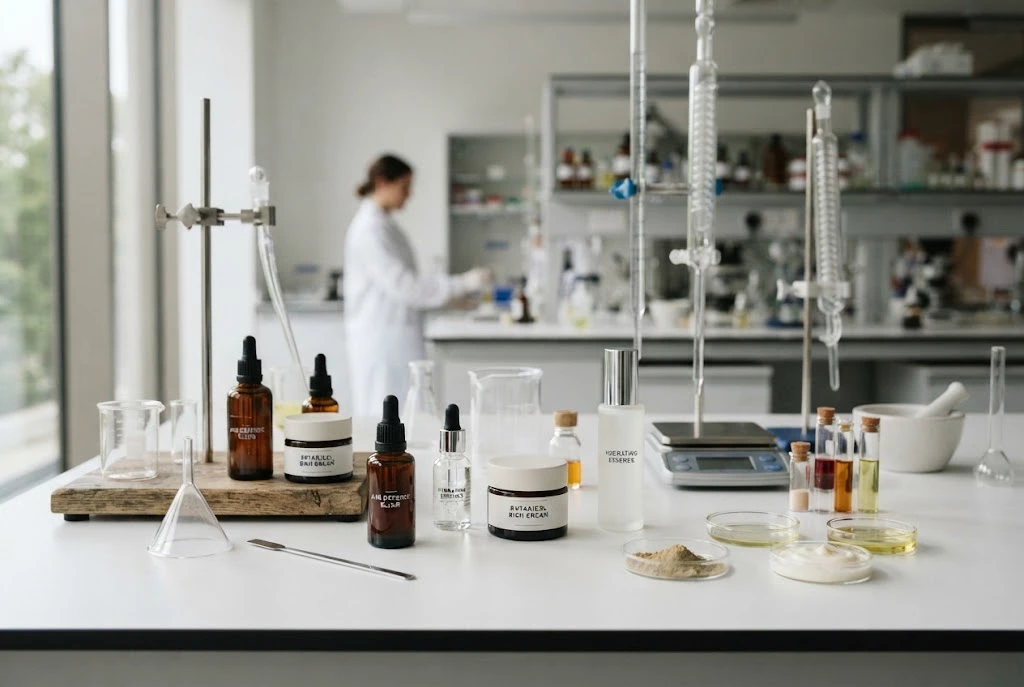
Beauty research is changing the way people understand skincare, cosmetics, ingredients and personal appearance. What was once driven largely by tradition, advertising and personal experience is increasingly influenced by scientific investigation, clinical studies, consumer behaviour and technology. From skincare research examining how ingredients interact with the skin to beauty psychology exploring why certain routines influence confidence, modern beauty is a much broader subject than products alone.
Understanding the evidence behind beauty claims can help consumers make more informed choices. It can also provide useful context when comparing cosmetic ingredients, evaluating new beauty technologies or deciding whether a particular trend is worth following.
What Is Beauty Research?
Beauty research covers the scientific and behavioural study of products, ingredients, treatments and practices associated with personal appearance and wellbeing. It can involve dermatology, cosmetic formulation, chemistry, psychology, consumer research and emerging technology.
The field includes both laboratory investigations and studies involving real people. Researchers may examine how an ingredient behaves in a formulation, how a cosmetic product performs under controlled conditions, or how consumers respond to particular beauty practices.
This broad approach matters because beauty products often sit at the intersection of science and personal preference. A moisturiser, for example, can be assessed for formulation characteristics and skin-related effects, while its appeal may also depend on texture, fragrance, packaging and the user’s expectations.
Why Beauty Science Matters to Consumers
Beauty science helps separate measurable product characteristics from claims that may be based primarily on marketing language. It does not mean every beauty question has a simple scientific answer. Instead, research provides a framework for understanding what has been tested, how it was tested and how confidently the results can be applied.
Consumers can benefit by looking beyond a product’s headline claim. Important questions include whether the claim has been tested, what type of evidence supports it, whether the research involved people, and whether the study examined the finished product or only an individual ingredient.
This approach is particularly useful as the beauty market introduces new formulations and technologies at a rapid pace. Research can help put emerging trends into perspective rather than treating every new product as a breakthrough.
Skincare Research and the Science of Skin
Skincare research is one of the most visible areas of beauty science. It can investigate topics such as moisturisation, skin barrier function, pigmentation, sensitivity, ageing and the performance of topical ingredients.
The skin is a complex biological system, so product performance depends on more than a single ingredient. Formulation, concentration, application method and individual skin characteristics can all influence the experience and outcome.
For that reason, consumers should be cautious about assuming that an ingredient that performs well in one context will produce identical results for everyone. Research findings provide evidence, but individual responses can still vary.
Understanding Evidence in Skincare
Different types of research provide different levels of information. Laboratory testing can help researchers understand mechanisms and ingredient behaviour. Controlled studies involving people can provide more direct information about practical outcomes. Reviews of multiple studies can then help researchers assess the wider body of evidence.
When reading skincare claims, it is therefore useful to consider the type and quality of evidence rather than simply looking for the word “clinical”. A product described as clinically tested may have undergone a specific form of testing, but that phrase alone does not explain every detail of the research.
Cosmetic Research: From Ingredients to Formulation
Cosmetic research extends beyond skincare. It can involve makeup, haircare, fragrance, personal care products and the development of new cosmetic formulations.
Researchers may study how ingredients interact with one another, how a formulation remains stable, how a product feels during application or how packaging affects product preservation. These factors are important because the finished cosmetic product is often more complex than its individual ingredients suggest.
Cosmetic ingredient research is particularly valuable when investigating the role and behaviour of specific substances. However, an ingredient should not automatically be judged as beneficial or unsuitable based on its name alone. Its purpose, concentration, formulation and intended use all matter.
For consumers, this makes ingredient literacy more useful than simply following lists of “good” and “bad” ingredients. Understanding why an ingredient is included and what evidence exists around its use can lead to more balanced decisions.
Beauty Clinical Studies and Product Claims
Beauty clinical studies can provide valuable evidence about how cosmetic products perform when used by people under defined conditions. Depending on the research design, studies may assess factors such as hydration, appearance, texture or other measurable characteristics.
Study design is important when interpreting results. A small study may offer useful information without being sufficient to establish a broad conclusion. Likewise, results from a controlled setting may not perfectly represent everyday use.
Consumers should therefore view individual studies as pieces of evidence rather than automatically treating them as final answers. Looking at the wider research landscape can provide a more reliable perspective.
How to Evaluate Beauty Evidence
Beauty evidence can come from many sources, including academic research, clinical investigations, laboratory testing, expert analysis and consumer studies. These sources do not necessarily answer the same questions.
A practical way to assess a beauty claim is to consider several factors:
- What exactly was tested? Determine whether the research involved an ingredient, finished product, treatment or beauty routine.
- Who participated? Consider whether the study involved people with characteristics relevant to the intended consumer.
- How was the study conducted? Research methodology can influence how confidently the findings can be interpreted.
- What outcome was measured? A measurable change is different from a subjective impression.
- Is there supporting research? Multiple studies can provide a stronger basis for understanding a claim than one isolated result.
Academic databases can also be useful when researching beauty science. PubMed, for example, provides access to a large collection of biomedical research literature and can help readers explore published studies relevant to skin and cosmetic science.
Beauty Psychology: Why Beauty Is More Than Skin Deep
Beauty psychology examines the relationship between appearance, perception, behaviour and emotions. This area adds an important human dimension to beauty research because people do not choose products based solely on technical performance.
Packaging, colour, fragrance, social expectations and personal identity can all influence how consumers perceive beauty products. A routine can also become part of someone’s daily habits, providing a sense of structure or self-care.
Beauty psychology is especially relevant when examining why certain trends spread quickly. Social media exposure, peer influence and changing cultural ideals can affect how people perceive products and appearance.
This is one reason beauty trends should not always be evaluated purely through a scientific lens. A product may become popular because it represents a particular aesthetic or lifestyle, even when its functional benefits are similar to products that already exist.
Beauty Technology Research and the Future of Personal Care
Technology is creating new opportunities for beauty research and product development. Digital skin analysis, personalised recommendations, advanced formulation techniques and data-driven product development are increasingly connected with the beauty sector.
Beauty technology research can explore how digital tools collect and interpret information about consumers or their beauty routines. It can also examine how technology may support more personalised product recommendations.
However, technological sophistication does not automatically guarantee better results. Consumers should still consider how a technology works, what information it uses and whether its recommendations are supported by credible evidence.
Beauty Research and Changing British Beauty Habits
Research can also help explain how beauty practices develop within different societies. In Britain, beauty preferences have been shaped by changing fashion, media, regional identities, social attitudes and access to international products.
Understanding these cultural influences adds useful context to scientific research because beauty decisions are rarely made in isolation. People combine evidence, experience, tradition and personal preference when developing their routines.
Readers interested in the cultural side of the subject can explore British beauty culture to understand how beauty habits and trends have developed across Britain.
How Research Connects With Sustainable Beauty
Scientific research is also influencing conversations about sustainability. Sustainable beauty involves questions about ingredients, packaging, manufacturing, product longevity and waste.
Research can help companies investigate alternative materials, improve formulations and assess different approaches to packaging. At the same time, consumers are increasingly interested in whether sustainability claims are supported by meaningful evidence rather than attractive marketing language.
The relationship between science and sustainability is therefore likely to become increasingly important. Readers exploring this area can learn more through our guide to sustainable beauty.
Why Beauty Statistics Need Research Behind Them
Statistics can make beauty industry trends easier to understand, but numbers also need context. A market figure, consumer survey or product-use statistic may describe a specific population, timeframe or research method.
That is why beauty statistics should be interpreted alongside information about how the data was collected. A headline number can be interesting, but understanding the methodology behind it provides a much stronger foundation for judging what it actually means.
For a broader look at data and consumer trends, explore beauty statistics UK and consider how research findings contribute to the wider picture.
What the Future of Beauty Research Could Look Like
The beauty industry is likely to continue moving towards more evidence-led product development. Advances in technology, improved research methods and growing consumer interest in ingredient transparency could all contribute to this shift.
Personalisation may also become more prominent. Instead of treating all consumers as having identical needs, future research may increasingly investigate differences in skin characteristics, environmental exposure, routines and preferences.
At the same time, consumers are likely to become more selective about evidence. As beauty information becomes easier to access, the ability to distinguish strong research from exaggerated claims will become increasingly valuable.
How Consumers Can Make More Informed Beauty Decisions
Consumers do not need to become scientists to benefit from beauty research. A few simple habits can make beauty information easier to evaluate.
Start by identifying the exact claim being made. Then look for evidence that directly addresses that claim rather than relying on a loosely related study. Check whether the information comes from research, expert interpretation, personal experience or promotional material.
It is also worth remembering that evidence does not eliminate personal differences. Skin type, routine, environment and individual preferences can influence how someone experiences a product.
Ultimately, the strongest approach combines credible evidence with realistic expectations. Research can provide direction, while personal experience helps determine whether a particular product or routine fits an individual’s needs.
Final Thoughts on Beauty Research
Beauty research brings together science, consumer behaviour, psychology and technology to create a deeper understanding of modern beauty. From skincare research and cosmetic ingredient research to beauty clinical studies and emerging technology, the field continues to expand.
For consumers, the biggest benefit is not simply discovering the latest ingredient or trend. It is learning how to assess beauty claims thoughtfully. By looking at the quality of evidence, understanding research limitations and considering the wider cultural and personal context, readers can make more informed choices.
As the beauty industry continues to evolve, evidence will remain an important part of the conversation. The future of beauty is likely to be shaped not only by new products, but also by better questions, better research and a more informed audience.
