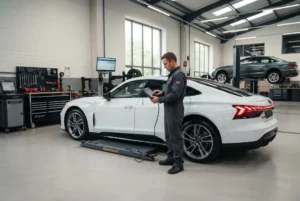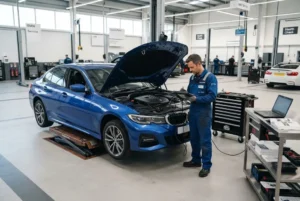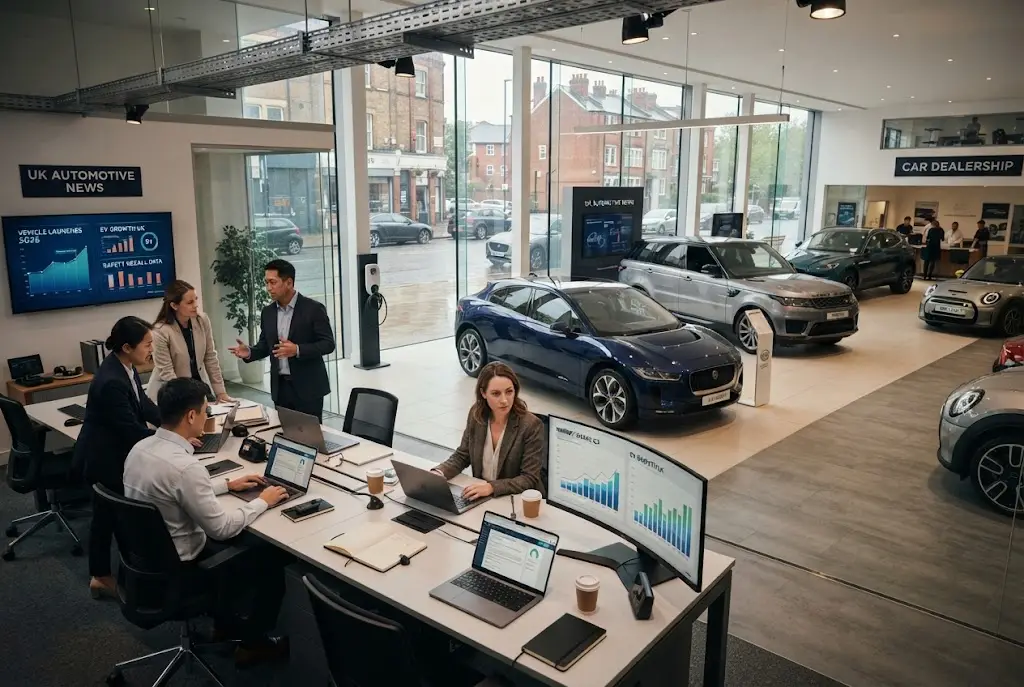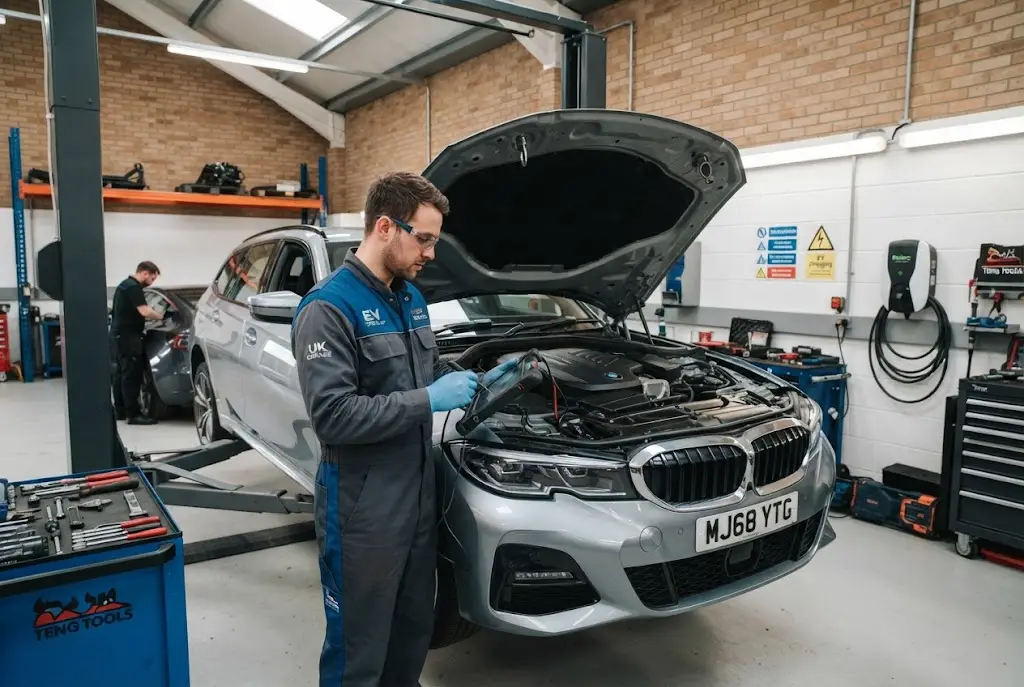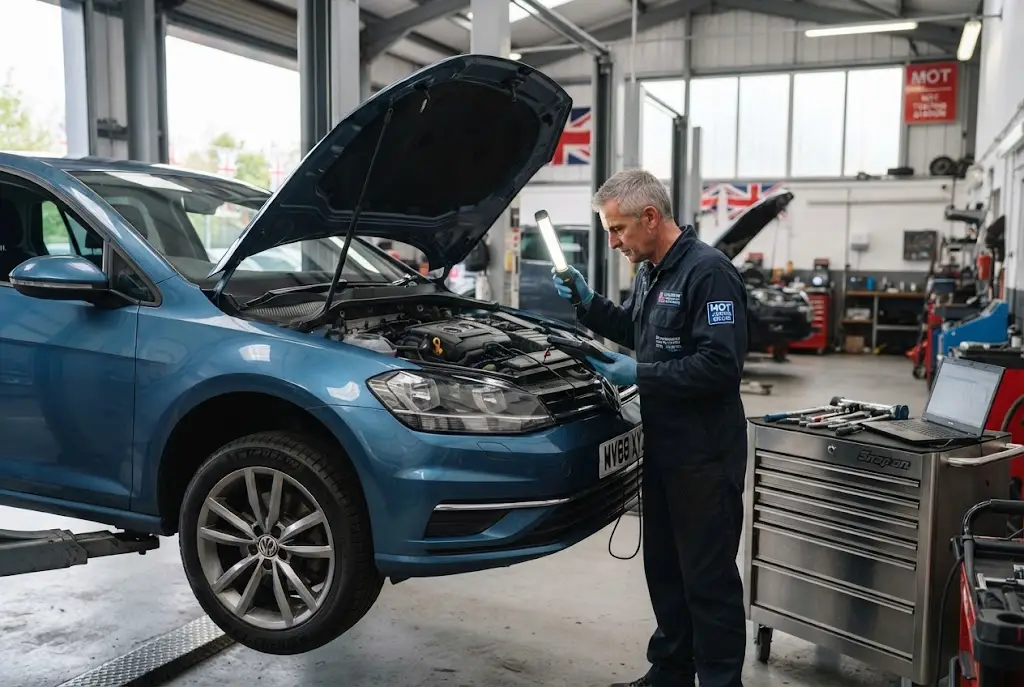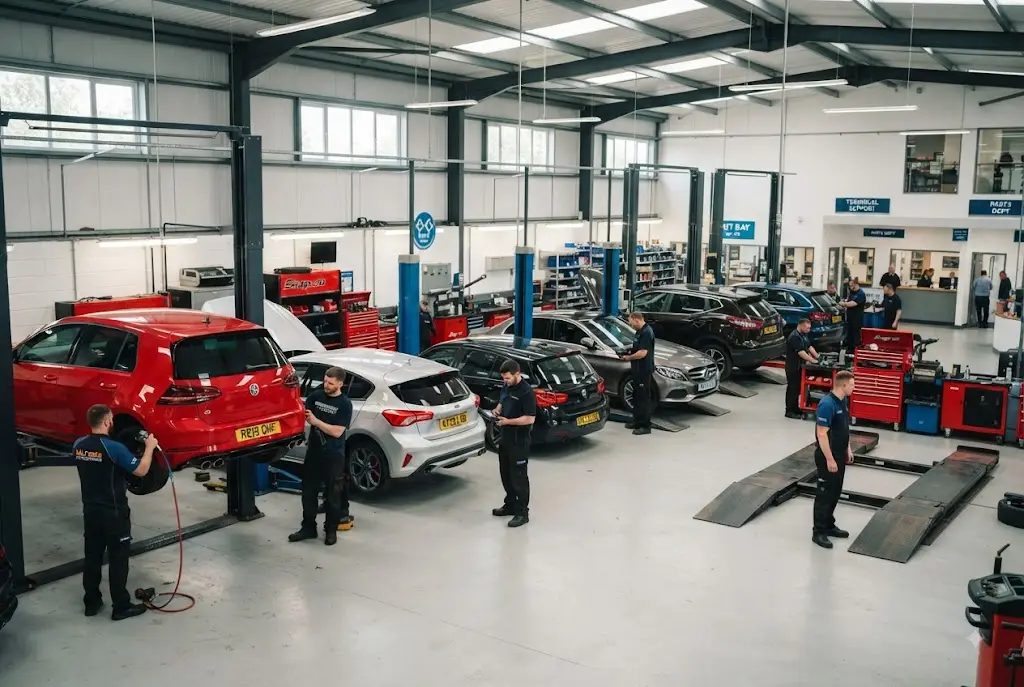
Automotive service companies are playing an increasingly important role in the UK’s changing vehicle aftermarket. From national workshop networks and independent garages to specialist accident repair businesses and technology providers, the sector is evolving as motorists keep vehicles for longer and workshops adapt to increasingly complex vehicles.
Business activity across the sector can also have a direct effect on motorists. Company expansions may create more local servicing options, while acquisitions can change the ownership of familiar workshops. At the same time, rising operating costs, technician shortages and the shift towards hybrid and electric vehicles are influencing how automotive businesses plan for the future.
What Are Automotive Service Companies?
Automotive service companies are businesses that provide maintenance, repair, inspection or related services for vehicles. The category is much broader than traditional garages because it includes national workshop groups, fast-fit operators, accident repair networks, specialist repair businesses and companies supporting workshops with technology and parts.
Some businesses operate directly through their own branches, while others use franchise or independent-garage networks. This means two workshops can carry the same network branding while remaining independently operated.
For motorists, the distinction matters because the name above the workshop is not always the same as the legal business operating the individual site. Understanding how the network works can therefore be useful when comparing services, warranties and customer support.
How the UK Automotive Service Market Is Changing
The UK automotive aftermarket is being shaped by several forces at once. Vehicles are becoming more technologically advanced, customers are increasingly price-conscious, and workshops need to invest in training and equipment to remain competitive.
The Motor Ombudsman reported in 2026 that rising operating costs were expected to be a major challenge for repairers, while many businesses also anticipated difficulty recruiting qualified and experienced technicians. The organisation’s research covered independent garages and franchise dealer workshops, highlighting pressures that extend across different parts of the service sector. :contentReference[oaicite:0]{index=0}
At the same time, the vehicle parc is changing. Hybrid and electric vehicles require workshops to understand high-voltage systems, electronic diagnostics and different maintenance procedures. That makes technician skills and workshop investment increasingly important to the competitiveness of automotive businesses.
Independent Garages Remain Important
Independent garages continue to represent a significant part of the UK automotive service market. Unlike large national chains, they often operate with a strong local focus and may build long-term relationships with customers in their communities.
Independent workshops can also specialise. Some concentrate on particular vehicle manufacturers, while others focus on diagnostics, performance cars, commercial vehicles, tyres or specific repair categories.
However, remaining competitive requires independent operators to keep pace with changing technology. A workshop that previously concentrated on conventional mechanical repairs may now need diagnostic equipment, technician training and safe working procedures for hybrid and electric vehicles.
Industry networks can provide another route for independent businesses to compete. Bosch Car Service, for example, describes itself as a network of independent garages and has expanded its UK and Ireland network to more than 350 locations. :contentReference[oaicite:1]{index=1}
National Workshops and Network Expansion
National workshops offer a different proposition. Their larger footprint can give motorists access to familiar services across multiple towns and cities, while centralised systems can support online bookings, customer service and marketing.
Network expansion is also a sign of how businesses are repositioning themselves within the aftermarket. In April 2026, Elite Garages announced that 14 former ATS Euromaster locations had transferred to its operation, taking its vehicle repair centre total to 38. :contentReference[oaicite:2]{index=2}
Such changes can be significant for local motorists. A familiar workshop may continue operating from the same premises while its ownership, branding or service structure changes. Drivers should therefore pay attention to company announcements when choosing where to have ongoing maintenance work carried out.
For a broader look at the UK’s major networks, our guide to garage chains covers some of the biggest names in the sector and explains how national and regional operators differ.
Why Acquisitions Matter in Automotive Services
Acquisitions are one of the clearest ways the automotive aftermarket can change. When a larger group purchases an independent repairer or a group of workshops, it can immediately expand its geographic coverage and customer base.
A recent example comes from The Vella Group. In April 2026, the automotive repair business completed two acquisitions involving independent repairers, taking its network to 20 sites across England and Wales. The acquired businesses were UK Carbody in Avonmouth and GB Flint Coachworks, which serves parts of Nottingham, Derby and Leicester. :contentReference[oaicite:3]{index=3}
For the companies involved, acquisitions can provide opportunities to increase scale, share resources and enter new geographic markets. For customers, however, the practical question is what happens after the deal.
Motorists should check whether existing warranties remain unchanged, whether the workshop’s services have changed and whether booking or customer-service arrangements have been updated.
Company Expansions Can Change Local Choice
Expansion is not limited to traditional garage groups. Automotive service companies can grow through acquisitions, franchise recruitment, new workshop openings and partnerships.
Revive! Auto Innovations, for example, reported continued growth in 2025 and announced further expansion plans in January 2026. The business operates a national network focused on mobile smart repairs for bodywork and alloy wheels, serving dealerships, insurers, fleet operators and private customers. :contentReference[oaicite:4]{index=4}
Expansion can increase competition, but it can also create greater specialisation. A business may decide that its strongest opportunity lies in accident repair, mobile servicing, fleet maintenance or another specific area rather than attempting to offer every possible workshop service.
Technology Is Becoming Part of the Workshop Business
Modern automotive service companies are increasingly dependent on digital tools as well as traditional workshop equipment. Garage management software can help businesses manage bookings, customer records, vehicle information, jobs and communication.
This trend was illustrated by ClearCourse’s acquisition of Motasoft in March 2026. Motasoft provides garage management technology for the independent automotive aftermarket and serves more than 1,200 automotive businesses across the UK, including independent garages and fast-fit tyre centres. :contentReference[oaicite:5]{index=5}
Digital systems can help workshops reduce administrative work and create a smoother customer journey. Online booking, automated reminders, digital job records and integrated customer communications can all become important differentiators as motorists become accustomed to managing more services online.
The Independent Workshop and EV Transition
The move towards electrification is another major issue for automotive service companies. Independent garages do not necessarily need to become specialist EV workshops, but they increasingly need to understand how electric and hybrid vehicles differ from conventional cars.
Training, diagnostic equipment and safe working practices are essential considerations. The aftermarket is already responding, with parts suppliers, workshop networks and garage groups developing products and support designed for the changing vehicle parc.
Stellantis said in May 2026 that it was expanding its Eurorepar Car Service network while using additional expertise, analytics and AI-powered tools to improve workshop performance. The initiative specifically targets growth and performance within the independent aftermarket. :contentReference[oaicite:6]{index=6}
For motorists, this transition means that the definition of a capable garage is changing. A workshop’s ability to work on modern electronic systems may become just as important as its traditional mechanical experience.
Our dedicated article on hybrid servicing explores the maintenance requirements created by hybrid vehicles, while EV servicing covers the growing specialist requirements associated with fully electric cars.
What Automotive Service Companies Need to Compete
Qualified Technicians
Technician expertise remains one of the most important assets in the service industry. Vehicles increasingly combine mechanical systems with electronics, software and advanced safety technology, making continuous training essential.
Modern Diagnostic Equipment
Accurate diagnosis can prevent unnecessary parts replacement and help workshops identify faults more efficiently. This becomes particularly important when dealing with vehicles equipped with sophisticated electronic control systems.
Strong Customer Communication
Customers want clear explanations before authorising repairs. Businesses that provide transparent quotations, realistic completion times and straightforward updates can make the repair process considerably easier for motorists.
Adaptable Workshop Services
Successful businesses need to respond to changes in the vehicle parc. That may involve expanding into hybrid and EV services, developing fleet maintenance capabilities or adding specialist diagnostics.
What Business Updates Mean for Motorists
Automotive business updates can sometimes seem relevant only to industry professionals, but they can have practical consequences for vehicle owners.
A workshop acquisition can change who handles a customer’s vehicle. A company expansion can bring a new service centre to a local area. A network partnership can give an independent garage access to additional training or technical resources.
Closures can have the opposite effect by reducing local choice and increasing demand at nearby workshops. Consequently, motorists who have used the same garage for years may benefit from occasionally checking whether the business remains independently operated or has become part of a larger group.
The Role of Business News in the UK Auto Aftermarket
Company news provides a useful window into the direction of the automotive service industry. Announcements about acquisitions, new locations, partnerships, technology investment and technician training can reveal where businesses see future demand.
For consumers, these developments can also help explain why services, workshop availability and business names change over time. Instead of viewing each garage as an isolated business, it is useful to understand the wider network and ownership structure behind it.
This is particularly relevant as the market moves through the transition from conventional powertrains towards a mixture of petrol, diesel, hybrid and electric vehicles.
How to Choose Between Automotive Service Companies
Motorists should compare businesses based on the job they actually need rather than choosing solely by company size.
Start by checking whether the workshop has experience with the vehicle and repair involved. Then compare the complete quotation, including labour, parts and any additional inspection or diagnostic charges.
It is also worth checking warranty terms and asking whether additional repairs will require approval before work begins. For specialist jobs, technician training and appropriate workshop equipment should be important considerations.
Finally, consider the individual branch or workshop rather than assuming every location within a large network offers an identical experience.
The Future of Automotive Service Companies
The UK’s automotive service market is likely to remain competitive as businesses adapt to economic pressure, changing vehicle technology and evolving customer expectations.
Large networks can use scale to invest in technology, training and geographic expansion. Independent garages can compete through specialist expertise, personal service and local reputation. Meanwhile, acquisitions and partnerships can create hybrid models that combine local workshop operations with the resources of larger groups.
For motorists, the result could be a wider range of service choices, but also a more complicated market to navigate. Understanding who operates a workshop, what services it specialises in and how well equipped it is for modern vehicles will become increasingly valuable.
Final Thoughts
Automotive service companies are at the centre of a rapidly changing UK aftermarket. Independent garages remain vital to local communities, while national workshops continue to expand, consolidate and invest in new capabilities.
Recent acquisitions involving businesses such as The Vella Group and Elite Garages demonstrate how quickly workshop networks can change. At the same time, technology acquisitions and new network strategies show that the modern automotive service business extends beyond the physical garage.
As hybrid and electric vehicles become a larger part of the UK’s vehicle parc, the companies that combine technical expertise, effective customer service and investment in modern workshop capabilities will be best positioned to compete. For motorists, keeping track of these business developments can make it easier to understand the changing choices available for servicing, maintenance and repairs.