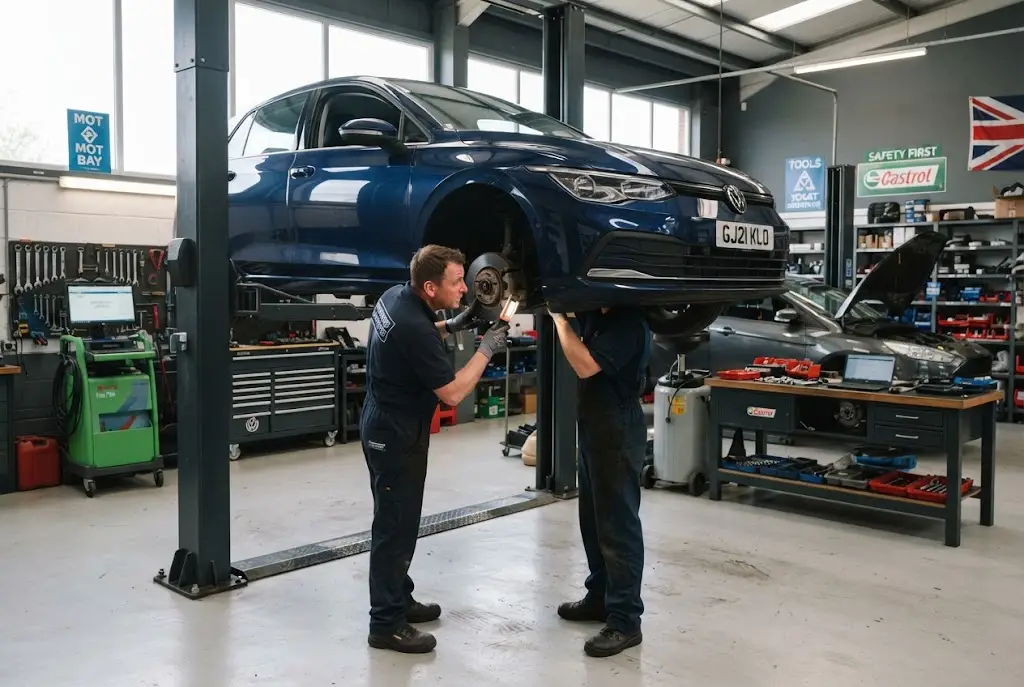
A service is also different from an MOT. While an MOT checks whether a vehicle meets specific legal roadworthiness requirements, servicing is about maintaining the vehicle according to its condition and manufacturer schedule. Understanding that difference can make it easier to compare quotes, plan ahead and avoid unnecessary surprises.
How Much Does a Car Service Cost in the UK?
There is no single UK-wide price for servicing. Current published pricing illustrates the range clearly. Checkatrade’s 2026 cost guide puts a typical full service at roughly £170 for a small car, £210 for a medium car and £395 for a large car, while an interim service is around £110. RAC’s July 2026 guidance also highlights that the price depends heavily on the vehicle and type of service required.
These figures should be treated as useful benchmarks rather than guaranteed quotes. A garage may charge more or less depending on labour rates, parts, oil specification, vehicle size and whether additional manufacturer-scheduled work is due.
For example, a routine oil and filter change may cost considerably less than a major service involving additional filters, spark plugs, fluids or other scheduled components. Comparing the headline price without checking what is included can therefore give a misleading impression of value.
Why Are Car Service Costs Increasing?
Several factors can push maintenance expenses higher. Garages have to account for labour, equipment, premises, diagnostic technology, replacement parts and consumables. When operating costs rise, some of that pressure can eventually appear in customer prices.
Inflation can also affect the wider automotive supply chain. Replacement components, specialist fluids, tyres and other consumables may become more expensive, while newer vehicles can require increasingly sophisticated diagnostic equipment and technical expertise.
That does not mean every garage increases prices at the same rate. Independent workshops, national chains and manufacturer dealerships have different business models, overheads and pricing structures. This is why researching local options remains important when comparing repair costs.
What Factors Affect Your Car Service Cost?
Vehicle Size and Engine
Larger vehicles can require more oil, larger quantities of consumables or additional labour. Engine size may also influence pricing, particularly where garages publish different rates for different vehicle categories.
Service Type
An interim service is generally less comprehensive than a full service. A major service can cost more because it may include additional scheduled maintenance items. Always check the manufacturer’s recommended servicing schedule before choosing the cheapest package.
Make and Model
Premium and specialist vehicles can have higher maintenance expenses because parts, fluids and technical labour may cost more. Some models also have servicing requirements that differ substantially from those of more common family cars.
Vehicle Age and Condition
Older vehicles may require more attention when they reach the garage. A service can reveal worn brakes, suspension components, belts, hoses, batteries or other parts that need attention. These additional jobs can turn a relatively predictable service bill into a larger repair bill.
Garage Location
Regional pricing is another important consideration. Labour rates and operating costs vary between areas of the UK, so two garages providing comparable services can quote different amounts.
That makes local cost comparisons useful, particularly when a driver has several reputable independent garages within reasonable travelling distance.
Car Service Cost vs Repair Costs
One of the biggest mistakes motorists can make is treating servicing and repairs as the same expense. A scheduled service is preventative maintenance. A repair usually addresses a fault, failure or component that has reached the end of its useful life.
A service might identify a developing problem before it becomes a major failure. For example, a technician could identify worn brakes, a deteriorating belt or a fluid leak during routine inspection. Addressing the issue early may help prevent more extensive work later, although the actual outcome depends on the fault and vehicle.
This is one reason motorists should not automatically postpone servicing simply because the vehicle appears to be running normally. Some mechanical problems develop gradually without producing an obvious warning to the driver.
How to Compare Car Service Prices
Comparing prices is useful, but the cheapest advertised figure is not necessarily the most meaningful comparison. Start by asking several garages for a quote based on the vehicle registration, make, model, mileage and required service level.
Then check what each quote includes. Important questions include:
- Which service level is being quoted?
- Are oil and filters included?
- Are manufacturer-specified parts or fluids included?
- Will diagnostic checks be carried out?
- Are labour charges included?
- Will additional repairs require approval before work begins?
- Does the garage provide a detailed invoice?
A transparent quote makes cost comparisons much easier. It also reduces the risk of comparing a basic service from one garage with a more comprehensive package from another.
Does an MOT Add to Your Car Service Cost?
An MOT and a service are separate things, although many garages offer them together for convenience. For a standard car, the government currently sets the maximum MOT test fee at £54.85. The final amount paid can be lower because garages are allowed to charge less than the maximum.
The MOT itself does not cover general maintenance in the same way as a service. If the test identifies a defect, the cost of repairs can therefore be additional to the test fee.
Drivers planning both appointments can learn more about the relationship between testing and maintenance in our guide to MOT and service requirements, while our upcoming coverage of auto inspection services will focus more closely on inspection developments and vehicle safety.
How Inflation Can Affect Maintenance Expenses
Inflation does not affect every component of a service bill equally. Garage labour, replacement parts, energy, rent, transport and other business costs can all influence the price a customer eventually sees.
The Office for National Statistics maintains a dedicated producer-price series covering maintenance and repair services of motor vehicles. Tracking this type of data provides broader context for understanding how costs in the automotive repair sector change over time.
For consumers, the practical lesson is simple: do not assume that an old service invoice represents today’s normal price. Instead, use previous bills as a reference point and obtain an up-to-date quote before authorising work.
Ways to Manage Rising Car Maintenance Costs
There are several practical ways drivers can make maintenance expenses easier to manage.
Follow the Manufacturer Schedule
Use the manufacturer’s servicing recommendations as the starting point. The required work can depend on mileage, age, engine type and driving conditions.
Compare Multiple Garages
Get quotes from reputable independent garages, national service providers and, where appropriate, manufacturer dealerships. Compare what is included rather than looking only at the advertised starting price.
Ask Before Approving Additional Work
If a technician discovers another problem, ask for an explanation and a written estimate before authorising repairs. This helps you understand which work is urgent and which items may be suitable for later attention.
Keep Service Records
Maintain invoices, service records and repair documentation. A clear maintenance history can help you monitor spending and demonstrate that the vehicle has been properly maintained when you eventually sell it.
Do Not Ignore Warning Signs
Unusual noises, warning lights, vibration, changes in braking performance or fluid leaks should not automatically be treated as minor issues. Prompt professional inspection can help establish whether a problem needs immediate attention.
Regional Pricing and Consumer Spending
UK drivers should expect some variation in local pricing. A garage in one area may have significantly different premises and labour costs from a garage elsewhere, while demand for specialist technicians can also influence pricing.
Regional differences make national averages useful for context but less useful as a personal quote. If you are budgeting for a service, local quotations based on your exact vehicle provide a more meaningful comparison.
Consumer spending decisions can also differ according to vehicle age and household circumstances. Owners of older cars may weigh the cost of repairs against the vehicle’s current value, while owners of newer vehicles may prioritise manufacturer schedules and warranty requirements.
Where Hybrid and Electric Vehicles Fit Into Service Costs
The growth of electrified vehicles is also changing the automotive servicing landscape. Hybrid vehicles combine conventional engines with electric systems, while battery-electric vehicles have different maintenance requirements from petrol and diesel cars.
That does not mean every electric or hybrid vehicle is automatically cheaper to maintain. The type of work required, technician expertise, diagnostic equipment and vehicle-specific components all matter.
As this market develops, our coverage of hybrid services and EV servicing will examine the changing maintenance landscape, including battery technology, specialist technicians and future mobility.
What Should Drivers Look for in a Service Quote?
A good service quote should be clear enough for the customer to understand exactly what they are paying for. Look for a breakdown of labour, parts or service components, VAT where applicable, and any work that is specifically excluded.
It is also worth asking whether the quote is fixed or simply an initial estimate. If additional work is likely to be identified during inspection, establish how the garage handles customer approval before work begins.
Taking these steps can make cost comparisons more useful and reduce the chance of unexpected maintenance expenses.
Planning Ahead for Future Car Service Costs
Routine vehicle maintenance is easier to budget for when drivers expect servicing to be an ongoing expense rather than an occasional emergency. Setting aside money throughout the year can make a scheduled service or unexpected repair easier to absorb.
It is also useful to separate routine servicing from a contingency fund for repairs. A vehicle can receive a regular service and still develop a mechanical fault later, so treating every maintenance bill as part of one fixed annual amount can lead to unrealistic budgeting.
For motorists who want to follow wider developments affecting the sector, our automotive news coverage can provide a broader view of market developments, recalls, consumer issues and other industry stories.
Final Thoughts on Car Service Cost in the UK
The car service cost in the UK depends on much more than a single national average. Service type, vehicle size, make and model, age, condition, garage location and additional maintenance requirements can all influence the final bill.
Current UK pricing guides show that routine servicing can range from relatively modest interim-service prices to several hundred pounds for larger or more comprehensive services. Government-set MOT fees provide a separate benchmark, while repairs identified during servicing can add significantly to the total.
The most practical approach is to compare like-for-like quotes, check exactly what is included, follow the manufacturer’s servicing schedule and ask for approval before additional repairs are carried out. With better planning and clearer cost comparisons, motorists can make more informed decisions about ongoing vehicle maintenance without relying solely on the cheapest advertised price.
For broader UK automotive developments, keep following Daily Flash for updates covering servicing costs, MOT developments, vehicle inspections, electrified vehicle maintenance and the latest automotive headlines.
Authoritative source: For official MOT fee information, see the UK Government MOT test fee guidance.