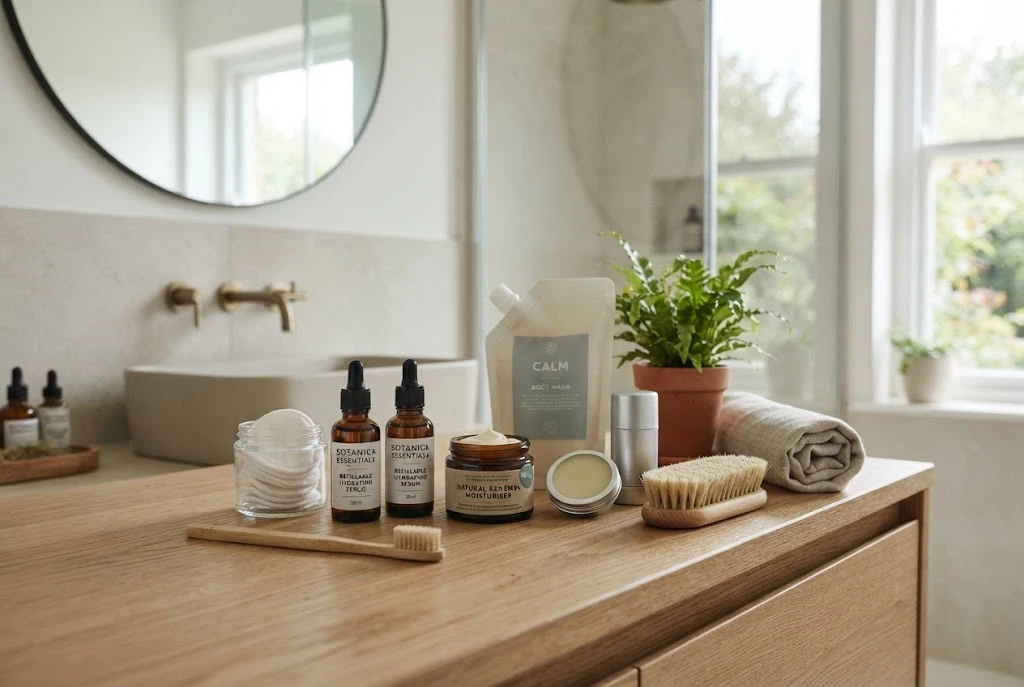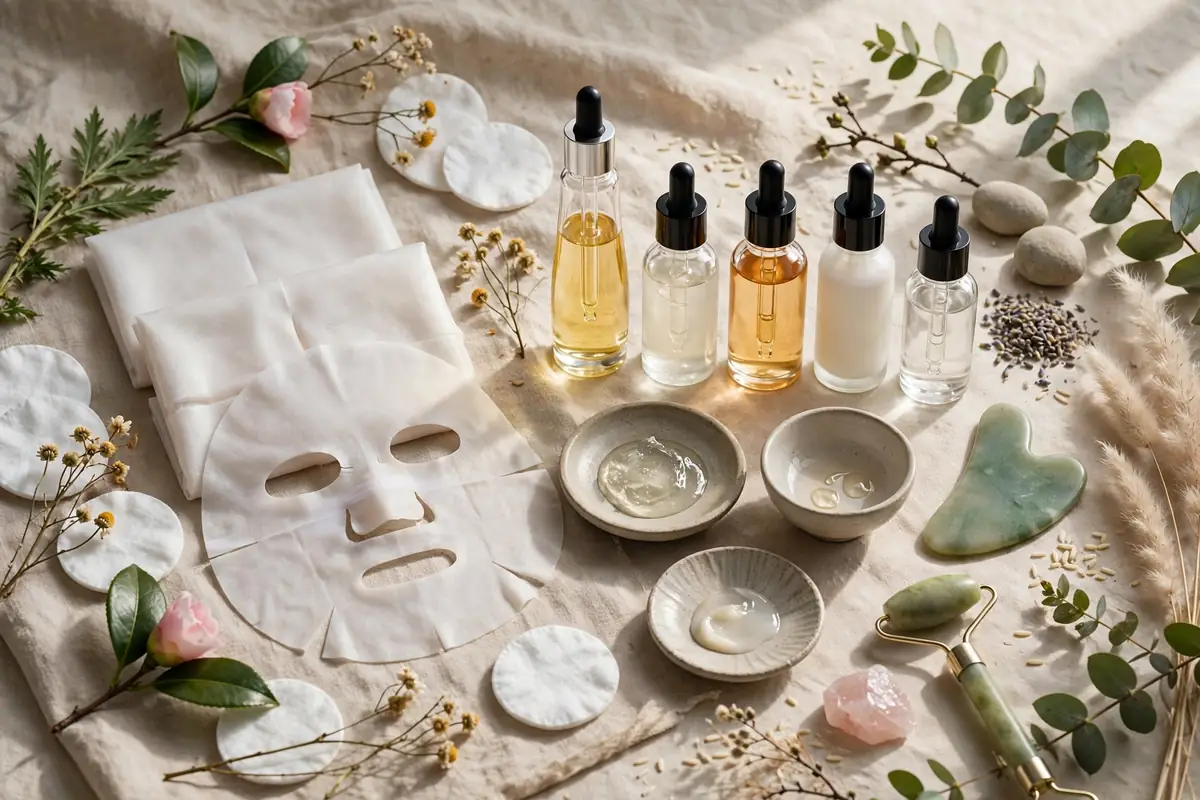
K-beauty trends UK have reshaped how British shoppers think about skincare: Korean beauty — with its emphasis on gentle layering, hydration, innovative textures, and affordable innovation — moved from niche import to high street staple within a decade. From sheet masks in supermarkets to snail mucin serums, glass skin routines, and cushion foundations, K-beauty trends continue to influence what UK shoppers buy and how they use it. In this guide to K-beauty trends UK, we explain what K-beauty is, which trends matter now, how to build a K-beauty routine that suits British skin and climate, and which trends to approach with care.
Korean beauty differs from Western beauty in philosophy as much as in products. Where Western skincare often focuses on single powerful actives and quick fixes, K-beauty emphasises prevention, hydration, and consistency: multiple light layers rather than one heavy cream, gentle exfoliation rather than harsh treatments, and sun protection as a daily habit rather than a holiday afterthought. That philosophy resonated with UK shoppers tired of aggressive routines that irritated their skin, and it helped K-beauty grow from online imports to mainstream retail.
K-Beauty Trends Shaping the UK Market Now
Several K-beauty trends are prominent in the UK today. Glass skin — a luminous, hydrated, almost translucent-looking complexion — remains influential, achieved through layered hydration rather than heavy makeup. Skin flooding, the practice of layering hydrating products on damp skin, has made hydration a central routine step. Fermented ingredients, from rice and soybean ferments to galactomyces, are prized for gentle brightening and skin barrier support. And snail mucin, once a novelty, is now a mainstream hydrating and repairing ingredient in serums and moisturisers.
Other trends include cushion foundations and skin tints that combine light coverage with skincare benefits, lip tints and gradient lip looks that favour soft colour over heavy lipstick, and scalp care as an extension of skincare — treating the scalp with the same attention as the face. Sunscreen innovation is another K-beauty strength: lightweight, cosmetically elegant SPF formulas that UK shoppers actually enjoy wearing daily, unlike heavier traditional sunscreens.
Building a K-Beauty Routine for UK Skin
A K-beauty routine for British shoppers should adapt Korean principles to British conditions: cooler, damper weather, softer water in many areas, and less intense sun than Korea’s summers. A practical routine starts with a gentle oil-based cleanser in the evening (to remove sunscreen and makeup), followed by a water-based cleanser, then hydrating layers — toner or essence, serum, and moisturiser — finished with sunscreen in the morning.
Not every step suits every skin. Oily skin may need lighter layers and fewer steps; dry skin benefits from richer creams and more hydration; sensitive skin should introduce one new product at a time and favour fragrance-free options. The famous “10-step routine” is a menu, not a requirement — most UK shoppers get the benefits of K-beauty from four or five well-chosen steps, not ten. Consistency matters more than step count.
Our guide to winter beauty trends UK covers seasonal routines in detail, while our guides to luxury beauty, sustainable beauty, beauty statistics UK, British beauty culture, and beauty research place K-beauty within the wider UK beauty landscape.
K-Beauty Trends to Approach With Care
Not every viral K-beauty trend deserves a place in your routine. Aggressive exfoliation — daily use of strong acids or scrubs promoted in viral videos — can damage the skin barrier, especially when combined with other actives. Unregulated or counterfeit products bought from unknown sellers may contain undisclosed ingredients or incorrect concentrations. And “miracle” claims for any single ingredient should be treated with scepticism: no serum transforms skin overnight, whatever social media suggests.
Buy from reputable UK retailers or official brand stockists, check ingredient lists, patch-test new products, and introduce actives gradually. If a product causes persistent irritation, stop using it and seek advice from a pharmacist or dermatologist rather than pushing through in the hope that skin will “get used to it”.
K-Beauty Ingredients Worth Knowing
Several K-beauty ingredients have earned their reputation through consistent results rather than hype. Snail mucin hydrates and supports skin repair, and suits most skin types including sensitive skin. Centella asiatica (cica) calms irritation and supports the skin barrier, making it popular for reactive skin. Niacinamide, though not exclusively Korean, is a staple of K-beauty formulations for brightening and oil balance. Rice water and fermented rice extracts offer gentle brightening, while green tea provides antioxidant protection.
Propolis, a resin collected by bees, is prized in K-beauty for hydration and glow, and ginseng has a long tradition in Korean skincare for vitality and radiance. None of these ingredients works miracles alone — their value comes from good formulation, suitable concentrations, and consistent use within a routine that suits your skin. When trying a new K-beauty ingredient, introduce one product at a time so you can tell what is actually helping.
Final Thoughts
K-beauty trends UK show no sign of fading: hydration-first routines, innovative textures, gentle actives, and elegant sun protection have changed British skincare for the better. The wisest way to enjoy K-beauty is to adopt its philosophy — gentle, consistent, hydration-focused care — rather than chasing every viral product. Choose a few well-suited steps, use them daily, protect your skin from the sun, and let consistency do what trends alone cannot.
For a companion guide on the automotive side, see our guide to service history and vehicle updates, which explains why a car’s paperwork matters as much as its condition.