Service history and vehicle updates are the paperwork backbone of car ownership: the record of every service, repair, and inspection a car has had, and the updates that keep that record current. For buyers, service history is proof that a car has been cared for. For owners, it is a planning tool that shows what is due and what has been done. For sellers, it is money — a complete history raises a car’s value and speeds its sale. In this guide to service history and vehicle updates, we explain what service history includes, how digital records work, how to check a car’s history before buying, and how to keep your own car’s record complete.
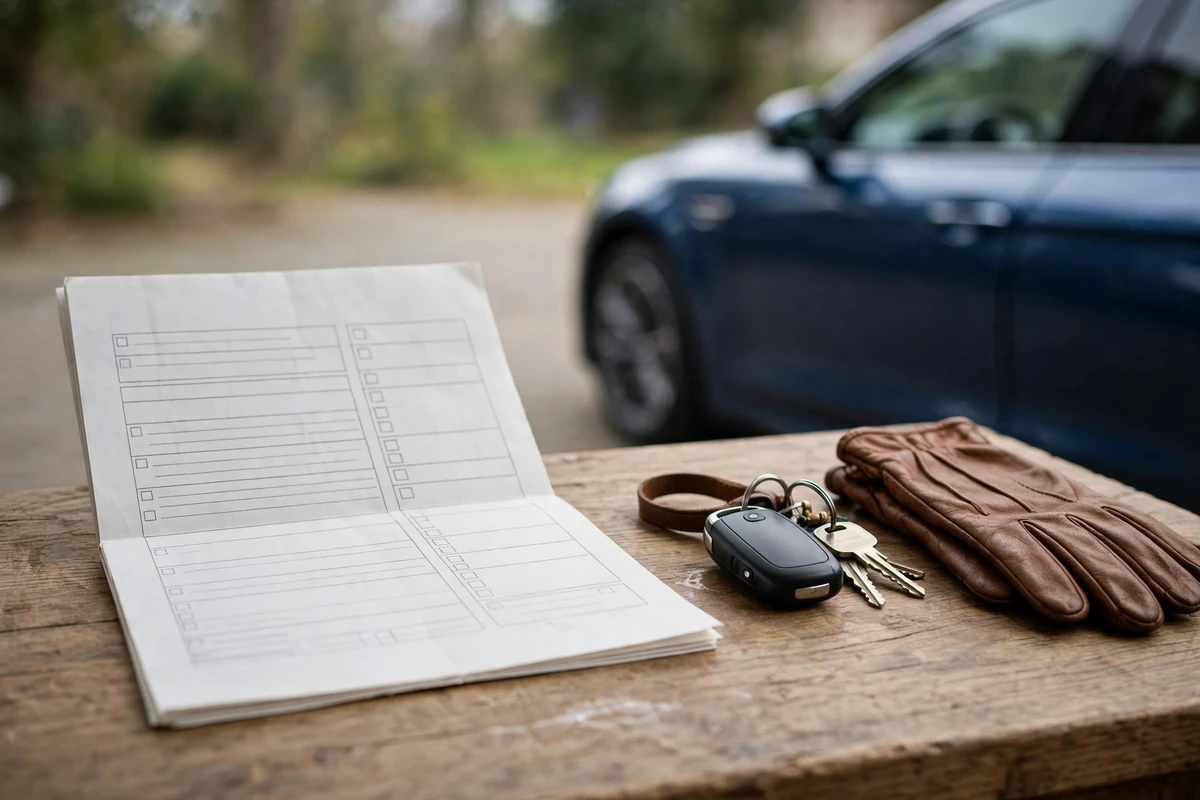
Service history traditionally lived in a stamped service book: each service visit earned a dealer or garage stamp, with mileage and date recorded. Today, many manufacturers also keep digital service records in central systems, accessible to dealers and sometimes to owners through apps or online portals. Both forms matter: the book is the physical proof, and the digital record is the backup that survives a lost book or a change of owner.
What Service History Should Include
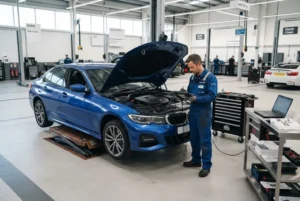
A complete service history includes every scheduled service, with date, mileage, garage, and work carried out — oil and filter changes, fluid replacements, brake and tyre work, and any additional items like cambelt changes. It should also include unscheduled repairs, MOT certificates, and recall work. Gaps matter: a car with services every year for five years and then nothing for three years raises questions, whatever the seller’s explanation.
Service history also reveals patterns: a car serviced at the same garage throughout its life suggests consistent care, while a car that has bounced between garages or has only partial records needs closer scrutiny. For older cars, some gaps are understandable — records get lost, garages close — but the seller should be able to explain them honestly, and the price should reflect any uncertainty.
Digital Service Records and Vehicle Updates
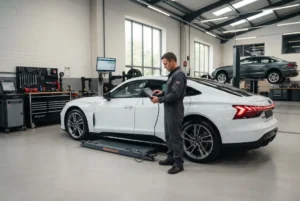
Digital service records are now standard for many brands: when a dealer services a car, the visit is logged in the manufacturer’s system, creating a record that follows the car regardless of owner. Some manufacturers let owners view this record online or through an app. Independent garages may also keep digital records, though these are less centralised — which is why keeping invoices matters even in the digital age.
Vehicle updates go beyond servicing: software updates for infotainment and driver assistance systems, recall notices, and safety updates are increasingly part of a car’s history. A car with outstanding recalls or missed software updates may have safety or functionality issues, and buyers should check recall status before purchasing. Sellers should disclose any outstanding items honestly.
Our guides to road safety in the UK, seasonal vehicle maintenance trends, auto service garage news, and automotive news cover the wider context of keeping cars safe and current.
How to Check Service History Before Buying
Before buying a used car, check its service history in three ways. First, ask for the service book and all invoices, and compare them with the car’s mileage and age for gaps or inconsistencies. Second, ask the seller whether the car has a digital service record and whether it can be shown or verified with a dealer. Third, run a vehicle history check for outstanding finance, write-off records, mileage discrepancies, and stolen status — history checks complement service records but do not replace them.
Be wary of red flags: a service book with stamps but no invoices, mileage that does not increase consistently between services, services recorded at implausibly short intervals, or a seller who cannot produce any records at all. None of these automatically means the car is bad, but each one deserves an explanation — and a price that reflects the uncertainty.
Keeping Your Own Car’s History Complete
Keeping a complete service history is simple but requires discipline: keep every invoice, stamp the book at every service, record mileage and date, and store MOT certificates together. Photograph or scan documents as a backup, and keep digital copies in a folder you can pass to the next owner. When you sell, present the history clearly — a well-organised folder signals a careful owner and justifies a better price.
Related guides on this site: car service costs, auto care services, and mobile auto service.
Service History and Electric Vehicles
Electric vehicles add new dimensions to service history. Battery health reports, charging history, and software update records are becoming as important as traditional service stamps. A used electric car’s value depends heavily on battery condition, and buyers should ask for battery health data alongside conventional service records. As electric cars age, their service histories will increasingly include battery diagnostics, thermal management checks, and charging system inspections — records that today’s buyers should already be requesting.
Hybrid vehicles sit between the two worlds: they need conventional engine servicing alongside electric system checks, and their histories should show both. Whatever the powertrain, the principle is unchanged — a complete, verifiable history protects value, supports safety, and gives the next owner confidence. The format may evolve from paper books to digital records, but the need for honest, complete documentation will not change.
Final Thoughts
Service history and vehicle updates are not bureaucratic details: they are the evidence of how a car has been treated, the basis for its value, and the tool that keeps it safe and reliable. Buyers should insist on seeing them, owners should keep them complete, and sellers should present them honestly. A car with a full, verifiable history is worth more, sells faster, and gives its next owner confidence — and that confidence is the real value of good paperwork.
For the beauty side of trends, see our companion guide to K-beauty trends UK, which explains how Korean beauty reshaped British skincare.