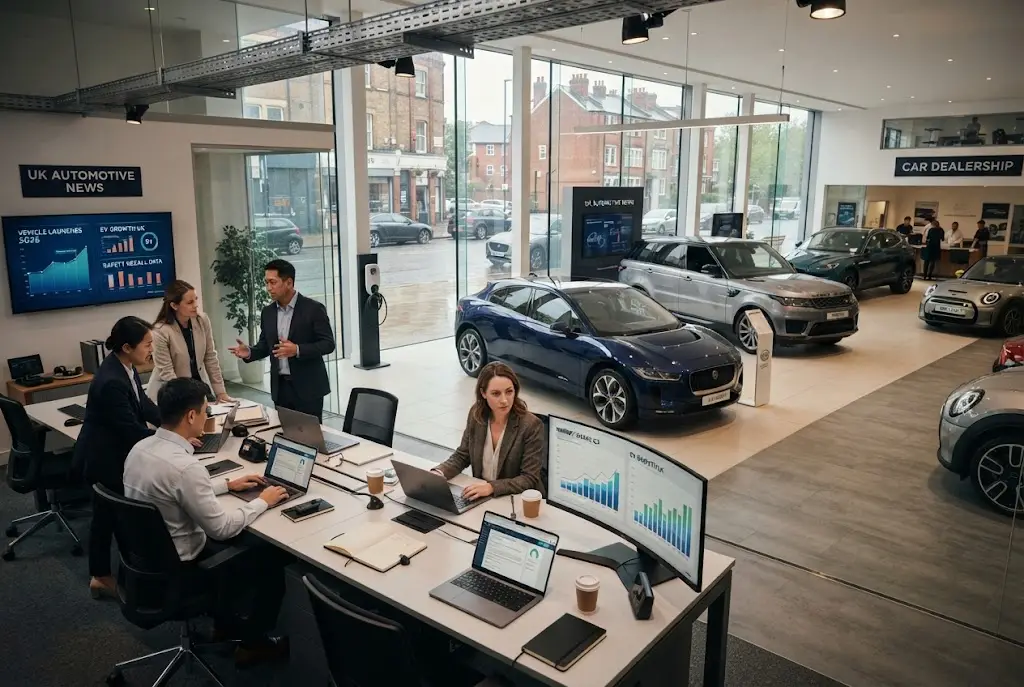
Recent developments show an industry undergoing significant change. The UK new-car market has recorded continued growth, electric vehicles are taking a larger share of registrations, manufacturers are introducing more zero-emission models, and major investment announcements are reshaping Britain’s automotive manufacturing base. At the same time, recalls and safety announcements remain important consumer issues.
Automotive News: What Is Happening in the UK Car Market?
The latest Society of Motor Manufacturers and Traders (SMMT) figures show that the UK new-car market continued to grow during August 2026. A total of 94,236 new cars were registered during the month, representing a 13.7% increase compared with August 2025.
August is traditionally a lower-volume month because many buyers wait for the September number-plate change. Even so, August 2026 represented the ninth consecutive month of overall market growth according to SMMT.
Year-to-date registrations reached 1,388,735 vehicles by the end of August, up 9.8% compared with the same period in 2025. Private registrations were also higher, although fleet registrations continued to represent the larger share of the market.
These figures provide useful context for understanding current consumer spending and vehicle demand. However, monthly registration data should not be interpreted as a complete measure of the entire automotive economy.
Electric Vehicles Continue to Shape Automotive Headlines
Electric vehicles remain one of the biggest themes in current automotive news. SMMT data shows that 28,063 battery-electric vehicles were registered in August 2026, giving BEVs a 29.8% share of the month’s new-car market.
Hybrid and plug-in hybrid registrations also increased. August recorded 11,940 hybrid electric vehicles and 13,707 plug-in hybrids, representing market shares of 12.7% and 14.5% respectively.
For the first eight months of 2026, BEV registrations reached 355,746, up 28.6% from 276,635 during the equivalent period in 2025. HEV registrations reached 194,327, while PHEV registrations reached 185,198.
This growth is changing not only the new-car market but also the aftermarket. More electrified vehicles eventually mean greater demand for suitable diagnostics, maintenance knowledge and specialist hybrid services.
More Electric Models Are Reaching UK Buyers
The number of electric vehicle choices available to UK motorists is also expanding. SMMT reported in September 2026 that more than 170 fully electric car models were available to UK buyers.
According to the industry body, 85 new battery-electric models had reached the UK market since 2023, doubling the number available to 171. SMMT also reported that the latest BEVs can travel an average of around 300 miles on a single charge.
Greater model choice gives consumers more options across different vehicle categories and price points. It also means that automotive businesses need to keep pace with a wider range of technologies, battery systems, charging arrangements and diagnostic requirements.
UK Automotive Investment Makes Headlines
Manufacturing investment has been another significant theme during September 2026. The UK government announced that McLaren Automotive plans to expand its UK footprint through a £500 million investment, with the company expected to create 1,000 new jobs by 2032.
Days later, the government announced that Bentley had completed a £350 million investment into its Crewe plant as part of preparations for its first fully electric vehicle. The government said the Bentley announcement brought more than £1 billion of automotive investment announcements to the UK within seven days when combined with other recent manufacturer investments.
Investment announcements can affect more than individual manufacturers. Manufacturing activity supports suppliers, engineering businesses, research and development, logistics and other parts of the automotive supply chain.
Automotive Manufacturing Faces Continued Pressure
While investment is increasing in some areas, UK vehicle manufacturing continues to face pressures. SMMT reported in August that UK vehicle production had fallen amid continuing industry challenges.
Manufacturers are dealing with an increasingly complex market involving electrification, international trade, supply chains, changing consumer demand and the investment required to develop new vehicle platforms.
The result is a mixed picture. New-car registrations have been growing, but manufacturing conditions do not necessarily move in the same direction at the same time. Registration figures measure vehicles entering the market, while production data reflects manufacturing activity and can be affected by model cycles, exports, plant changes and other factors.
Recall Announcements Remain Important Consumer News
Vehicle recalls are another area motorists should pay attention to. A recall occurs when a manufacturer or relevant authority identifies a potential safety or compliance issue that requires action.
For example, Stellantis announced major recall activity during 2026 involving vehicles affected by safety-related issues. Earlier in the year, more than 44,000 vehicles in the UK were reported as being recalled over a fault that could potentially lead to fires.
Recalls can involve different manufacturers and models, so drivers should not assume that an issue affecting one vehicle applies to another. Owners should use the official recall information relevant to their vehicle and contact the manufacturer or authorised repair network when instructed.
Recall work is distinct from ordinary servicing. A vehicle may have a recall outstanding even if its routine maintenance is up to date, which is why checking manufacturer communications remains worthwhile.
Why Automotive Recalls Matter for Vehicle Owners
A recall announcement can be particularly important when it concerns brakes, steering, fuel systems, electrical components, airbags, software or other safety-related equipment.
Drivers should pay attention to letters, emails or other official communications from manufacturers. If a manufacturer contacts you about a safety campaign, follow the instructions provided rather than relying solely on general automotive discussions online.
Owners can also keep service and inspection records organised. Our guide to auto inspection services explains how professional inspections can complement MOT testing and routine servicing.
MOT Developments Continue to Affect Drivers
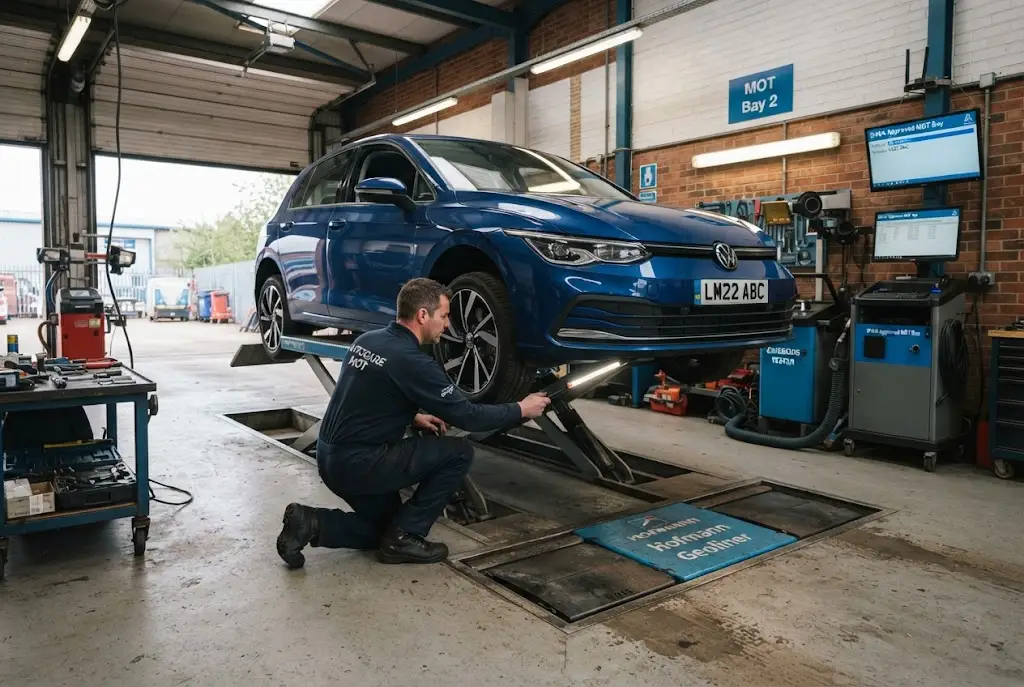
Changes to vehicle testing are another recurring subject in UK automotive news. During 2026, DVSA began the national rollout of photographs at MOT tests, with the first phase involving around 2,500 garages from 3 August.
The system allows participating MOT testers to take and upload a photograph of a vehicle during the test. The rollout is being phased so that DVSA can monitor how the service performs before expanding it further.
Other 2026 developments include changes affecting certain zero-emission goods vehicles. From 1 June, qualifying zero-emission goods vehicles between 3,501kg and 4,250kg became Class 7 vehicles for MOT purposes.
These developments form part of the wider evolution of vehicle testing as vehicle technology and the composition of the UK fleet change.
For a dedicated explanation of current testing developments, see our guide to MOT and service rule changes.
What Current Automotive News Means for Drivers
Industry headlines can sometimes feel distant from everyday motoring, but many developments have practical consequences for consumers.
New vehicle technology can influence the choice of servicing provider. Growing EV adoption means drivers may increasingly need access to technicians familiar with electric and hybrid systems. Recall announcements can require owners to arrange manufacturer repairs, while MOT changes can affect the way vehicles are tested and recorded.
At the same time, broader market conditions can influence vehicle prices, availability and consumer incentives. Drivers considering a new or used car should therefore consider current market information alongside the specific vehicle they are evaluating.
How Automotive News Can Affect Car Service Costs
Industry developments can also influence the cost and availability of vehicle maintenance. Changes in parts supply, technician skills, vehicle technology and workshop equipment can all affect servicing businesses.
Electric and hybrid vehicles may require specialist equipment and training, while older petrol and diesel vehicles continue to require conventional maintenance. This means the UK aftermarket is increasingly supporting multiple technologies simultaneously.
For consumers concerned about maintenance budgets, our guide to car service cost covers the factors that influence servicing prices, including vehicle type, service level, garage location and additional repair requirements.
Automotive Technology Is Moving Beyond Powertrains
Automotive innovation is no longer limited to engine and drivetrain technology. Software, connectivity, driver-assistance systems, digital diagnostics and automated-driving research are also becoming important parts of the industry.
The UK government has been supporting trials and development in connected and automated mobility. Such developments could eventually affect how vehicles are designed, tested, insured, maintained and used.
However, emerging technology should be distinguished from technologies already available to ordinary consumers. A research project, pilot programme or industry announcement does not necessarily mean that a new system is immediately available for general use.
What to Watch in the UK Automotive Market
Several areas are likely to remain prominent in UK automotive coverage as 2026 progresses:
- New-car registration trends and consumer demand
- Battery-electric, hybrid and plug-in hybrid adoption
- New EV model launches and vehicle availability
- UK automotive manufacturing investment
- Vehicle production and supply-chain developments
- Manufacturer recalls and safety campaigns
- MOT and vehicle-testing changes
- Charging infrastructure and EV ownership
- Automotive technology and connected vehicles
- Government policy affecting vehicle manufacturers and motorists
Following these areas together gives consumers a more complete picture than focusing on individual headlines in isolation.
How Consumers Can Follow Automotive Headlines
Not every automotive headline requires action. Consumers should distinguish between a general industry story, a manufacturer’s announcement and information that specifically applies to their own vehicle.
For safety recalls, testing rules and legal requirements, official government or manufacturer information should take priority. For market trends, registration data from established industry sources can provide useful context.
It is also important to check publication dates. Automotive rules, prices, vehicle availability and manufacturer policies can change, so an old article may no longer accurately describe the current situation.
Automotive News and the Future of UK Mobility
The UK’s automotive market is becoming more diverse. Petrol and diesel vehicles remain part of the existing fleet, while hybrids, plug-in hybrids and battery-electric vehicles continue to gain ground in new registrations.
Manufacturers are investing in new products and production facilities, while policymakers continue to consider how best to support the transition towards lower-emission transport. At the same time, consumers are balancing vehicle costs, practicality, charging access, technology and maintenance requirements.
This combination means that automotive news increasingly connects several areas that were once discussed separately. Vehicle sales affect servicing demand, electrification affects technician training, manufacturing investment affects supply chains and recalls can directly affect vehicle owners.
Final Thoughts on Automotive News in 2026
The latest automotive news from the UK reflects a market undergoing substantial change. New-car registrations have continued to grow, electrified vehicles are taking a larger share of the market, manufacturers are expanding their electric model ranges and major investment announcements are supporting parts of the UK automotive manufacturing sector.
At the same time, motorists need to remain aware of practical issues such as vehicle recalls, MOT developments, servicing requirements and changing technology. Industry-level developments do not affect every driver in the same way, so consumers should always check whether a particular announcement applies to their vehicle or circumstances.
For Daily Flash readers, following automotive developments as an ongoing topic provides a useful way to understand changes in the vehicles people buy, maintain and operate across the UK.
Authoritative source: For current UK vehicle registration and market data, see the Society of Motor Manufacturers and Traders (SMMT) car registration data.