

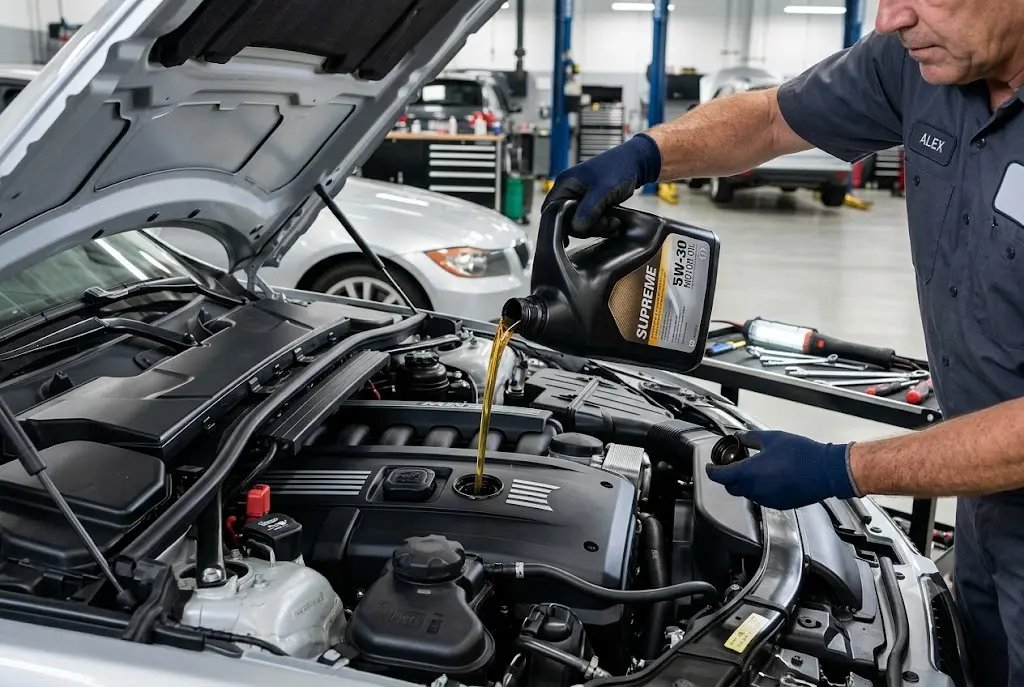
Regular oil change and filter maintenance is one of the most important aspects of keeping your car engine running smoothly. Engine oil lubricates moving parts, reduces friction, and prevents overheating, while the oil filter removes contaminants that can damage your engine over time.
Ignoring this simple maintenance task can lead to reduced performance, higher fuel consumption, and even serious engine damage.
What Does an Oil Change and Filter Involve?
An oil change service typically includes:
- Draining old engine oil
- Replacing the oil filter
- Refilling with fresh oil
- Checking for leaks and basic engine inspection
This process is often included in routine servicing. To understand how it fits into broader maintenance, see what a full service car includes.
Why Is Changing Engine Oil So Important?
Reduces Engine Wear
Fresh oil ensures proper lubrication, preventing metal parts from grinding against each other.
Improves Fuel Efficiency
Clean oil reduces engine strain, helping your car run more efficiently.
Prevents Overheating
Oil helps regulate engine temperature by reducing friction and dissipating heat.
Extends Engine Life
Routine oil changes protect your engine from long-term damage and costly repairs.
How Often Should You Change Oil and Filter?
The recommended interval depends on your vehicle and driving habits, but general guidelines include:
- Every 5,000 to 7,500 miles for older vehicles
- Every 10,000 to 15,000 miles for modern cars
- At least once a year regardless of mileage
Following a proper vehicle service schedule ensures you don’t miss important maintenance intervals.
Signs Your Car Needs an Oil Change
Even if you follow a schedule, watch for these warning signs:
- Dark or dirty oil
- Engine noise or knocking sounds
- Oil warning light on the dashboard
- Reduced engine performance
- Exhaust smoke
If you notice these issues, visit a trusted car mechanic garage near me promptly.
Types of Engine Oil
Conventional Oil
Suitable for older engines and basic driving conditions.
Semi-Synthetic Oil
A blend of conventional and synthetic oil, offering better performance at a moderate cost.
Fully Synthetic Oil
Provides the best protection and performance, especially for modern or high-performance engines.
Your vehicle manufacturer will recommend the most suitable type.
Cost of Oil Change and Filter in the UK
The price of an oil change varies depending on the type of oil and vehicle, but typical costs include:
- Basic oil change: £50 – £100
- Synthetic oil change: £80 – £150
These costs are relatively low compared to the cost of servicing a car when major repairs are needed.
DIY vs Professional Oil Change
DIY Oil Change
Some drivers choose to change their oil themselves to save money. However, this requires proper tools, disposal methods, and knowledge.
Professional Service
Having a professional perform the service ensures correct oil type, proper disposal, and a quick inspection of other components.
For most drivers, professional servicing is the safer and more convenient option.
How Oil Changes Fit into Overall Maintenance
Oil changes are a key part of routine servicing and are typically included in interim and full services. Staying consistent helps maintain your auto maintenance history and supports long-term vehicle reliability.
They also play a role in preparing your car for inspections such as deciding whether to do MOT or service first.
Tips to Extend Oil Life
While regular changes are necessary, you can maximise oil life by:
- Avoiding aggressive driving
- Maintaining proper oil levels
- Using high-quality oil
- Driving regularly to prevent oil degradation
Final Thoughts
A routine oil change and filter replacement is one of the simplest yet most effective ways to protect your engine. It improves performance, enhances fuel efficiency, and prevents costly damage.
By following recommended intervals and using the right oil type, you can keep your car running smoothly for years to come. For more technical guidance on engine oil standards, you can visit the Castrol engine oil guide.
